 Fresh Spaces, Happy Faces
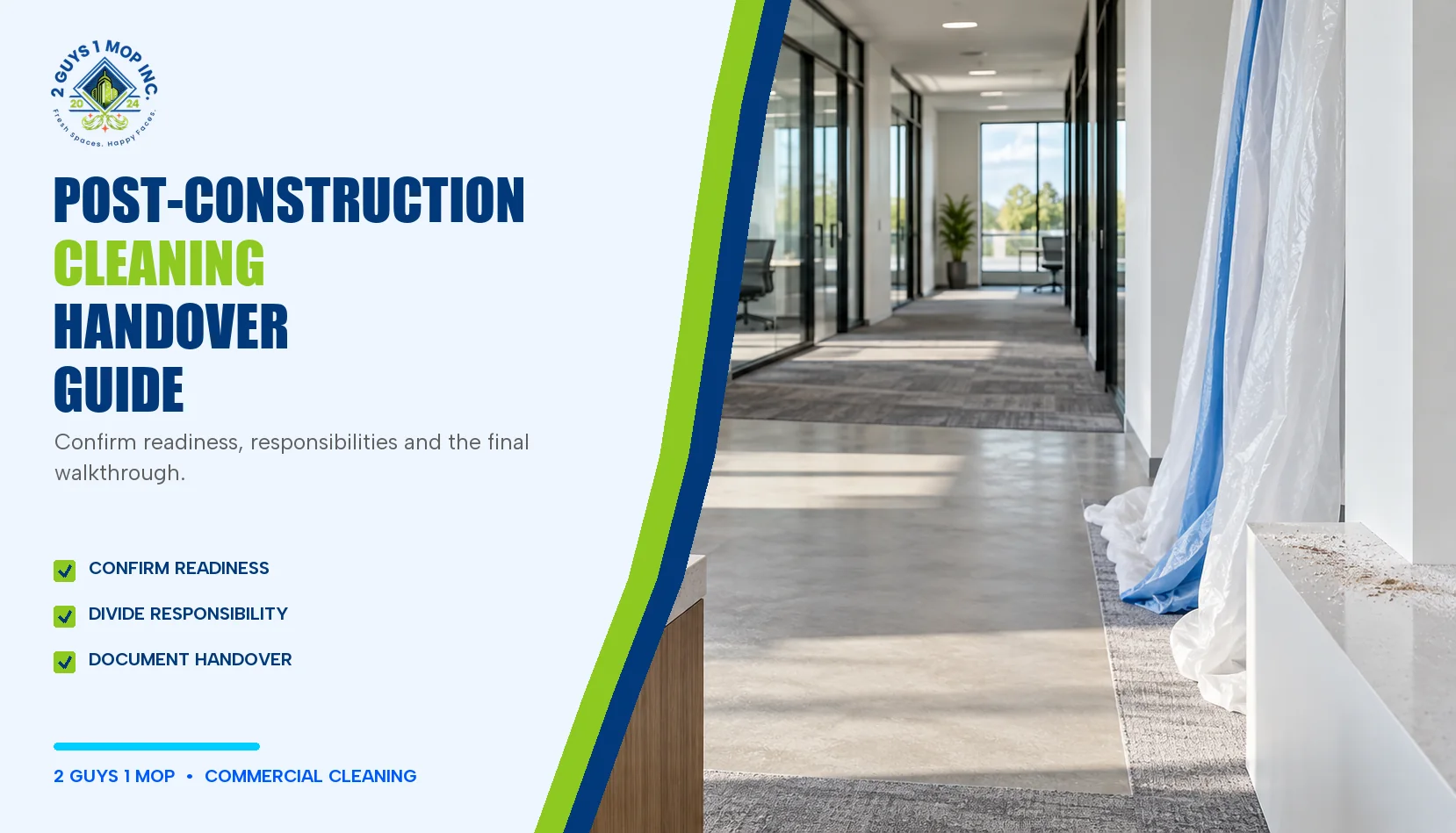
A commercial renovation is not ready for handover just because the last visible installation is complete. Before post-construction cleaning begins, the project team should confirm that dust-producing work has stopped, access is clear, responsibilities are assigned, and new finishes have documented care restrictions. This guide explains how to plan post-construction cleaning in North York without turning the final clean into another round of construction work.
Quick readiness check
- Dust-generating cutting, sanding, drilling, and touch-up work is complete in the cleaning area.
- Construction materials, tools, and loose debris have been removed or assigned to a responsible party.
- Permanent power, lighting, water, and safe access are available where the agreed work requires them.
- New floors, glass, millwork, fixtures, and coated surfaces have product or manufacturer care instructions available.
- The cleaning scope identifies included areas, exclusions, residue concerns, and the standard for sign-off.
- A final walkthrough contact can approve completed work and record deficiencies.
Start With a Ready-for-Cleaning Handoff
Cleaning too early creates avoidable rework. If a trade returns to sand a wall, cut tile, drill anchors, or complete ceiling work after detailed cleaning, dust can settle again on ledges, fixtures, glass, and floors. A room-by-room readiness decision is more useful than treating the whole property as either finished or unfinished.
Before confirming the cleaning date, walk the affected areas with the contractor or project lead. Note any active work, incomplete installations, wet coatings, exposed wiring, blocked routes, unprotected openings, or materials still waiting for removal. Areas that are not ready can be excluded from the first pass and scheduled later instead of being cleaned twice without a clear change order.
Health Canada’s office-building guidance recommends removing construction materials and debris, cleaning the area for the contaminants that may be present, returning building systems to a functional state, and confirming air-handling systems are clean, balanced, and operational before a repaired or renovated office is reoccupied. Those building-system checks belong with the appropriate contractor or qualified professional, not automatically with the cleaning crew.
Divide Responsibilities Before Anyone Starts
“Post-construction cleaning” can mean different things to a contractor, tenant, property manager, and cleaner. A written scope should separate construction work from cleaning work before quotes are compared or a start time is booked.
Confirm who is responsible for:
- removing construction waste, packaging, offcuts, and surplus materials;
- moving tools, lifts, ladders, and stored products out of the cleaning route;
- removing protective film, labels, adhesive, paint, grout haze, or other trade residue;
- cleaning the exterior of vents and diffusers versus inspecting or cleaning inside the air-handling system;
- accessing high areas and deciding what equipment or site controls are required;
- providing waste containers and arranging disposal;
- identifying delicate or specialty surfaces and supplying care instructions;
- protecting finished areas if trades must return; and
- approving touch-ups after the final walkthrough.
The CCOHS construction-site housekeeping checklist calls for debris removal, planned disposal of scrap and surplus materials, designated waste areas, and clear access routes. That is construction-site housekeeping guidance, not a promise that every item belongs in a commercial cleaner’s scope. Recording the boundary avoids surprises for both the client and the cleaning provider.
Plan the Clean in Phases
Project teams often use terms such as rough clean, detailed clean, final clean, and touch-up differently. Define the expected result instead of relying on the label alone.
Construction-stage or rough cleanup
This phase may include gathering loose material, clearing access routes, and reducing bulk dust so remaining work can proceed. Heavy debris removal, hazardous material, trade waste, and disposal may require separate arrangements. Do not assume they are included in a cleaning quote.
Detailed final cleaning
This begins after the relevant dust-producing and finishing work has stopped. The agreed scope may cover high and horizontal surfaces, fixtures, doors, millwork exteriors, glass, tracks, counters, washrooms, shared areas, and floors. The actual list should reflect the property, materials, access, and exclusions recorded during the walkthrough.
Touch-up before occupancy or handover
A later pass can address dust that has settled again, fingerprints from inspections, minor scuffs, and areas affected by approved deficiency work. Define how many touch-ups are included, what triggers extra work, and who can authorize it.
Build the Scope by Area, Surface, and Residue
A useful scope is specific enough that the project team and cleaner can inspect the same result. Organize it by zone, then identify surfaces and known residue within each zone.
High surfaces, fixtures, and ventilation exteriors
List accessible ledges, door frames, light-fixture exteriors, pipes, grilles, and diffuser exteriors that need attention. Separate surface dusting from electrical, mechanical, duct, or air-system work that requires another qualified provider.
Walls, doors, millwork, cabinets, and counters
Record which finished surfaces may be wiped, what products are permitted, and whether cabinet or drawer interiors are included. Paint, adhesive, silicone, grout, and protective-film residue can require different methods, so flag it during the walkthrough rather than treating all marks as ordinary dirt.
Glass, frames, and tracks
State whether the scope covers interior glass, exterior glass, partitions, frames, tracks, stickers, labels, or film. Access limitations and the risk of damaging coatings, tint, seals, or frames should be reviewed before residue removal begins.
Floors, carpet, edges, and transitions
Identify each floor material and obtain relevant care instructions. Separate routine vacuuming or damp cleaning from adhesive removal, machine scrubbing, polishing, sealing, stripping, or other specialty treatment. Include edges, corners, thresholds, and transition strips in the inspection route when they are part of the agreed scope.
Kitchens, washrooms, and shared areas
List fixtures, counters, cabinet exteriors, partitions, mirrors, and floors. Confirm whether appliances, cabinet interiors, dispensers, and consumable restocking are included. A renovated room may look complete while still awaiting plumbing, electrical, or fixture commissioning, so unresolved system work should remain with the responsible trade.
Protect New Finishes and Confirm Product Restrictions
New does not mean damage-proof. Before cleaning, collect care instructions for flooring, glass, stone, metal, millwork, coatings, appliances, and fixtures. If a residue cannot be identified or the approved method is unclear, pause that item and refer it to the project lead or appropriate specialist.
The scope should record test areas where needed, restricted products, curing times, surfaces that must remain dry, and responsibility for pre-existing scratches or construction damage. Cleaning should not be used to conceal a deficiency that belongs on the contractor’s punch list.
Treat Construction Dust as a Project Condition
Construction dust is not one uniform material. The project team should identify the work and materials that generated it so the cleanup method matches the condition. If construction activities may have produced silica-containing dust, Ontario’s silica guidance says cleanup after each operation is encouraged and warns against dry sweeping or compressed air. The required controls depend on the classified work and should be determined by the responsible employer or constructor.
For ordinary office housekeeping, Health Canada recommends methods that reduce dust generation, such as damp wiping or wet methods. It also says HEPA-filtered vacuums should be used whenever possible. That guidance does not establish which equipment a specific cleaning company uses. Equipment and methods still need to be confirmed in the project scope.
After the detailed clean, allow time for a focused inspection. Check horizontal ledges, glass in angled light, floor edges, and other agreed surfaces. If trades re-enter the area, record what changed before assigning touch-up responsibility.
Record the Final Walkthrough and Handover
Use the written scope as the walkthrough checklist. Inspect by zone rather than from the doorway, and record any incomplete item with its location, responsible party, and target follow-up. Photos can help document a condition when everyone involved agrees on their use, but they do not replace a clear written scope.
Before sign-off, confirm:
- all included zones were accessible and inspected;
- exclusions and unresolved construction deficiencies are recorded;
- agreed residue and surface work is complete or assigned for follow-up;
- waste and removed materials are in the agreed location;
- any touch-up window is documented; and
- the person authorized to accept the work has completed the walkthrough.
If the project also involves a tenant transition, review the separate guidance for move-in and move-out cleaning in North York so turnover work is not mixed into the construction scope by accident.
When to Request a Professional Scope Review
Bring a cleaning provider into the planning conversation when the project includes multiple zones, specialty finishes, substantial dust, uncertain residue, restricted access, phased trade completion, or a firm handover date. A walkthrough allows the provider to identify questions and exclusions before work begins. It is not a substitute for advice from the contractor, manufacturer, HVAC professional, hygienist, or another specialist where their expertise is required.
For project-specific service information, review the North York commercial post-construction cleaning service. When you are ready to discuss the property, areas, timing, and known conditions, request a project-specific assessment.