
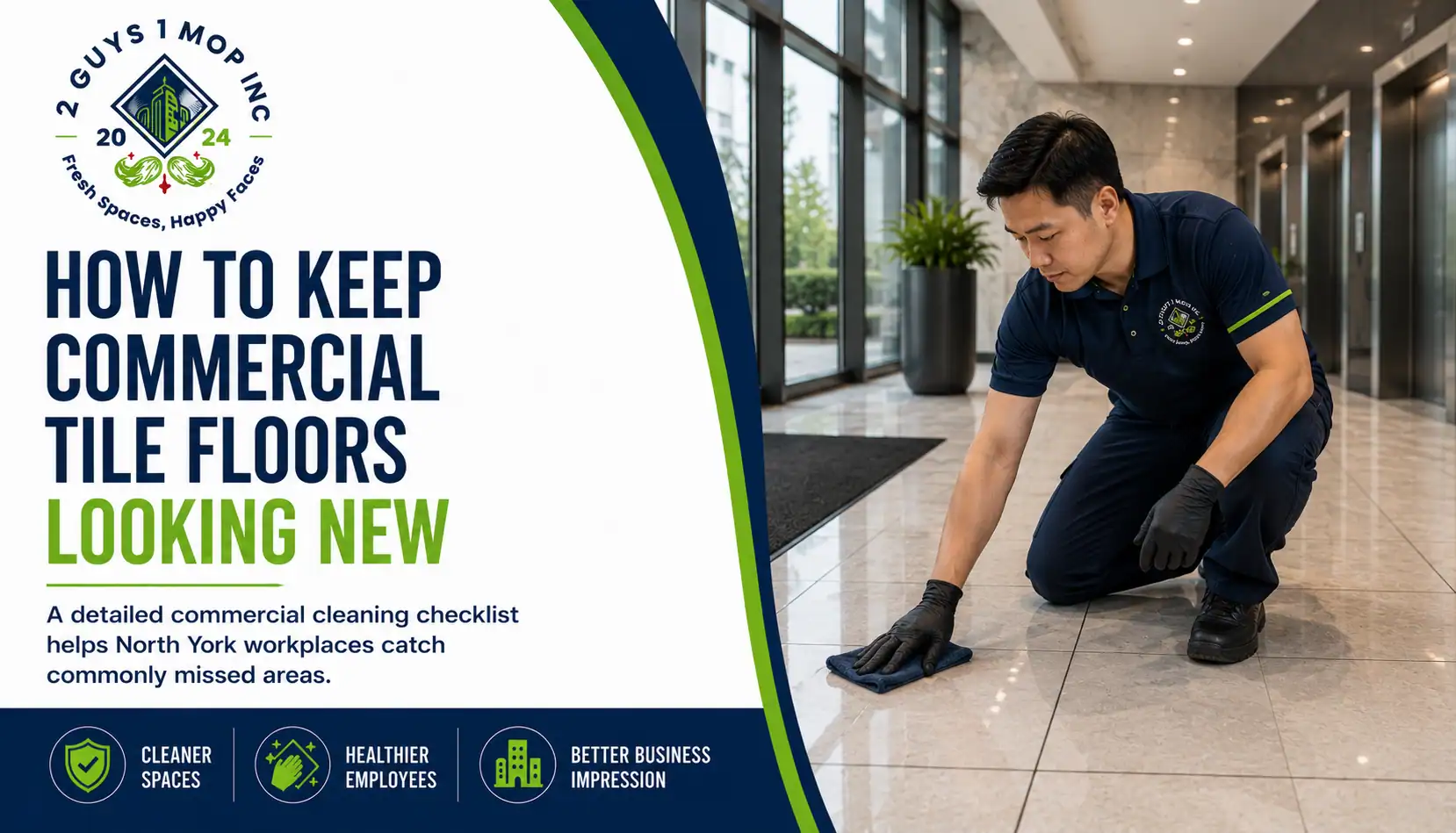
Commercial Tile Floor Cleaning matters because commercial tile floors stay presentable when daily soil control, periodic scrubbing, edge work, and finish protection are planned together. For North York businesses, the right cleaning plan should reflect the building type, visitor flow, staff routines, and the areas that collect soil or residue fastest.
How to Keep Commercial Tile Floors Looking New is not just a housekeeping topic. Tile can look dull when grit, mop residue, salt, and traffic patterns build up across entrances, corridors, and washroom approaches. A practical plan gives cleaners a clear scope, gives managers better consistency, and helps the workplace feel ready for staff, clients, tenants, or patients.
Businesses reviewing commercial cleaning services should ask whether the service plan covers both visible presentation and the quieter details that tend to fall behind between visits.
For safety context around floor care and traffic areas, managers can also review CCOHS slips, trips, and falls guidance when setting practical cleaning expectations.
Why It Matters
Every commercial space has pressure points. Some are obvious, such as entrances and washrooms. Others are easier to miss, including chair bases, storage corners, appliance handles, ledges, floor edges, shared counters, and rooms that are used heavily for short periods.
For teams using commercial cleaners, these pressure points should be reviewed before the schedule is finalized. A checklist that fits the actual workplace will perform better than a generic task list copied from another building.
Common Problems
The first step is identifying what creates the problem. Foot traffic, food use, dust, moisture, paper handling, equipment movement, winter salt, or frequent visitor turnover can all change what needs attention.
- remove grit before it scratches surfaces
- mop with clean solution and proper dilution
- detail edges and corners
- watch grout lines and transition strips
- schedule machine scrubbing when needed
- review mats during wet weather
These tasks do not always need to happen at the same frequency. Some belong in the daily routine, while others fit better as weekly detail work or periodic deep cleaning. The key is making sure they are named, scheduled, and checked.
The best schedules also leave room for judgment. A cleaner may find that one hallway needs extra attention after a wet morning, while another area can wait for the next detail rotation. A useful checklist gives structure without preventing the team from responding to what is actually happening in the building.
Supervisors should review these patterns over time. If the same issue appears every week, it should move from an occasional correction into the regular scope. This keeps the service proactive instead of relying on complaints from staff or visitors.
Practical Recommendations
A building manager can often spot cleaning gaps by walking the space at different times of day. Morning inspections show what was completed overnight. Midday checks show which areas decline fastest. End-of-day reviews reveal where debris, odours, fingerprints, or clutter return.
Photos and short notes can make these reviews easier. A simple record of recurring marks, dusty edges, wet entrance areas, or busy shared rooms helps everyone understand where the cleaning plan should change. It also gives the cleaning team clearer feedback than a general request to be more detailed.
For broader support, cleaning services can help businesses align routine cleaning with seasonal needs, visitor volume, and specific workplace risks. This is especially useful when the same complaint keeps returning.
Mistakes to Avoid
Consistency depends on tools, timing, and communication. Cleaners need access to the right supplies, enough time for detail tasks, and a clear way to report areas that need extra attention. Managers need to know which tasks are included each visit and which ones are scheduled separately.
When a workplace has washrooms, kitchens, waiting areas, or shared staff spaces, scheduled janitorial services can help keep the routine from becoming too informal. Documented work is easier to review and easier to improve.
Timing matters as much as task selection. Some businesses need cleaning after hours to avoid disrupting staff. Others need touchpoint checks during the day because visitor traffic is constant. The right timing depends on how the building operates, not just on square footage.
It also helps to connect the scope to the main service category. For many workplaces, office cleaning services is the base routine, while detail cleaning, floor care, upholstery care, post-project cleaning, or periodic sanitization are added when the building needs them.
Training should match the surfaces in the building. A cleaner working around tile, carpet, fabric seating, glass, stainless steel, or medical reception furniture needs to know which products and methods are appropriate. Using the wrong approach can leave residue, streaks, dull finishes, or avoidable wear.
Supply management is part of the cleaning outcome too. Stocked paper products, labelled bottles, clean mop heads, fresh cloths, and working equipment help the team complete the scope consistently. When supplies are missing or disorganized, even a good checklist becomes harder to follow.
When to Hire Professionals
Review the cleaning plan whenever the building changes. New staff, a busier reception area, tenant turnover, furniture moves, seasonal weather, or renovation work can all change where dirt and residue collect.
Seasonal changes are especially important in Ontario workplaces. Winter can increase salt and moisture near entrances. Spring can bring more dust and pollen. Summer can make waste and staff kitchen odours more noticeable. Fall often brings heavier debris from wet leaves and changing outdoor conditions.
A good review compares the current checklist against what people actually see and use each day. It should include floors, surfaces, washrooms, staff areas, visitor areas, storage spaces, entrances, and any rooms that support customer-facing work.
Managers should also separate appearance issues from hygiene issues. A scuffed wall edge, dusty corner, or dull floor may affect presentation. A washroom touchpoint, food-prep counter, or shared appliance handle may need a more consistent sanitation routine. Both matter, but they may require different timing and tools.
Businesses can also compare the routine against available cleaning services or review the 2 Guys 1 Mop blog for related maintenance ideas before changing the schedule.
For multi-room workplaces, a rotation calendar can prevent detail tasks from being forgotten. One week may focus on entrance edges and glass. Another may focus on staff spaces, storage rooms, upholstery, or floor detail. This approach keeps the regular visit manageable while still improving the full building over time.
The goal is not to make the checklist complicated. The goal is to make it specific enough that the same standards can be repeated. Clear tasks, realistic timing, and periodic reviews give both the business and the cleaning team a better way to measure results.
When the plan is reviewed regularly, small corrections can happen before the workplace feels neglected. That is usually easier and less disruptive than waiting until floors, surfaces, staff areas, or visitor spaces need a larger reset.
Another useful practice is to review cleaning outcomes with the people who use the space every day. Front desk staff, office managers, supervisors, and employees often notice recurring issues before they appear on a formal inspection. Their feedback can point to washrooms that need more frequent checks, entry areas that collect debris quickly, or shared surfaces that need clearer ownership.
Budget should be part of the conversation as well. A realistic cleaning plan does not need to treat every task as daily work. It should prioritize the areas that affect safety, comfort, odour control, and first impressions, then rotate lower-frequency detail tasks in a way that keeps the building steadily improving without overloading each visit.
When expectations, timing, and priorities are documented, it becomes much easier to adjust service without starting over. That gives the business a practical way to keep standards consistent as traffic patterns, staffing levels, weather, and building use change throughout the year.
For next steps, businesses can review request a cleaning quote.
Final Thoughts + CTA
How to Keep Commercial Tile Floors Looking New comes down to building a cleaning plan that is specific enough to be useful. The more closely the checklist matches the space, the easier it is to keep standards consistent.
If your North York workplace needs help with commercial tile floor cleaning, 2 Guys 1 Mop can review your space and recommend a practical cleaning schedule that fits how the building is used.