
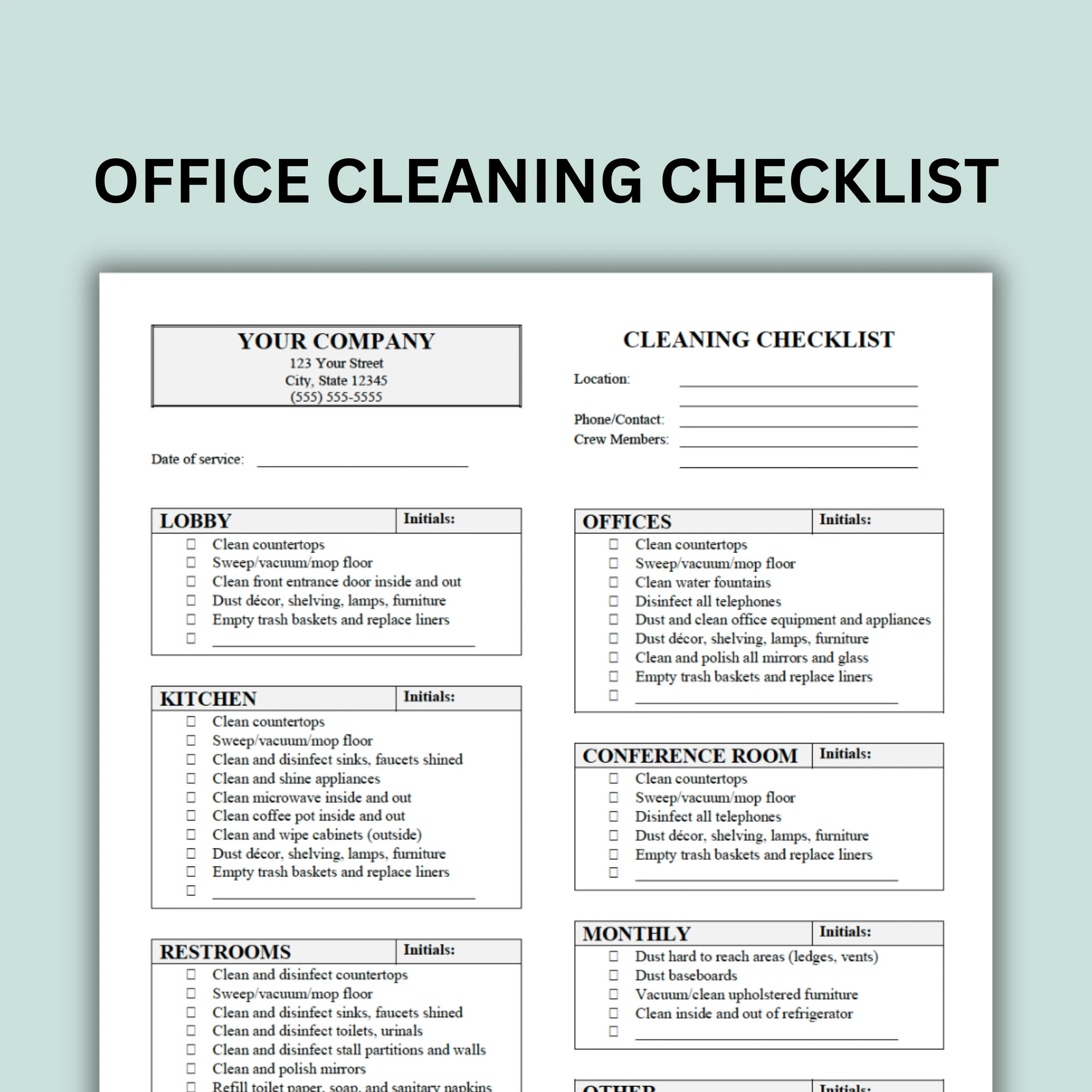
An effective office cleaning checklist helps businesses maintain a workspace that feels clean, organized, and professional every day. For many companies, cleanliness affects far more than appearance alone. It influences employee comfort, day-to-day productivity, client perception, and how easy the workplace is to manage over time. A tidy office creates a stronger first impression, supports a healthier environment, and helps the entire space feel more under control.
Without a structured cleaning routine, offices often become inconsistent. Some tasks are handled regularly, while others are delayed until dirt, clutter, or odors become too obvious to ignore. Desks may be wiped down, but touchpoints, corners, shared spaces, and deeper maintenance tasks are often missed. That is one reason many businesses choose professional office cleaning services instead of trying to manage workplace cleaning informally.
A proper checklist gives your office structure. It breaks cleaning into practical tasks that can be handled daily, weekly, and monthly, so the entire workplace is maintained consistently instead of reactively. It also makes it easier to compare your current setup with a more complete cleaning plan. If you are reviewing your options, it helps to look at all commercial cleaning services available for business spaces so you can see how a stronger routine should be organized.
This guide outlines a complete office cleaning checklist for businesses, along with the areas that are often overlooked, the mistakes that commonly reduce cleaning quality, and the reasons a structured cleaning routine can make such a noticeable difference in your workplace.
Why Every Business Needs an Office Cleaning Checklist
An office cleaning checklist creates consistency. Without one, cleaning becomes reactive. Tasks are handled when someone notices a problem, when an important client is visiting, or when the workspace starts to feel messy enough that it cannot be ignored. That approach usually leads to uneven results. Some sections of the office get too much attention, while others are forgotten completely.
With a checklist, the cleaning process becomes organized and repeatable. Everyone knows what should be done, how often it should be done, and which areas matter most. That makes it easier to maintain a professional standard across the entire workplace instead of only addressing visible issues. It also helps prevent small problems from turning into bigger ones, such as washrooms falling behind, floors showing excessive buildup, or common areas starting to look neglected.
A checklist also improves accountability. Whether cleaning is handled internally or by a service provider, there is a clear framework in place. It is easier to spot gaps, adjust schedules, and maintain a standard that supports your business image. Workplace cleanliness is also closely tied to health and safety expectations. The Canadian Centre for Occupational Health and Safety (CCOHS) emphasizes structured cleaning routines as part of maintaining safer and healthier work environments.
- Creates a consistent routine across the office
- Reduces dust, dirt, and buildup over time
- Improves hygiene in shared spaces
- Supports a more professional appearance
- Makes the workspace easier to manage overall
Daily Office Cleaning Checklist
Daily cleaning tasks are the foundation of a well-maintained office. These are the responsibilities that keep the workspace presentable from one day to the next and prevent obvious mess from building up in the busiest areas. Offices with steady employee traffic, visitors, meetings, and shared workstations benefit the most from a strong daily routine because those spaces can become disorganized quickly.
Daily cleaning is not only about appearances. It also keeps the workplace functioning more smoothly. Overflowing garbage, dusty counters, dirty washrooms, and untidy shared areas create unnecessary distractions. When daily maintenance is handled properly, the office feels more organized and more comfortable throughout the workweek.
- Empty garbage bins and replace liners
- Wipe down desks, counters, reception surfaces, and shared tables
- Disinfect high-touch areas such as handles, switches, and shared equipment
- Clean kitchen counters, sinks, and breakroom tables
- Sweep or vacuum high-traffic floor areas
- Sanitize washroom fixtures and replenish paper products and soap
- Spot clean entry glass, mirrors, and visible smudges
Businesses that invest in commercial cleaning for businesses often find that daily tasks are completed more consistently because they are built into a reliable schedule rather than left to employees who already have other priorities.
If your team is trying to decide which tasks truly need daily attention and which can wait, reviewing daily vs weekly office cleaning can help you create a more practical routine based on your office size, layout, and traffic levels.
Weekly Office Cleaning Checklist
Weekly office cleaning covers the areas that do not usually need attention every single day but still have a major impact on the overall condition of the workspace. This is where many offices begin to fall behind. The surface may look acceptable, but dust starts building along edges, floors lose their freshness, and common spaces begin to feel less cared for.
Weekly tasks help bridge the gap between daily upkeep and deeper maintenance. They keep the office feeling fully maintained instead of merely “good enough.” This is often where the difference becomes visible between a workspace that is casually cleaned and one that is managed to a professional standard.
- Vacuum carpets thoroughly, including edges and corners
- Mop all hard-surface floors
- Dust shelves, ledges, furniture, and baseboards
- Clean interior glass, mirrors, and partition panels
- Wipe down chairs, tables, and shared meeting room surfaces
- Disinfect shared office equipment and touchpoints more thoroughly
- Perform a more detailed washroom cleaning
These weekly responsibilities help prevent the gradual buildup that daily maintenance alone does not fully address. They also help your office look more polished over time, especially in client-facing spaces like entrances, boardrooms, and reception areas.
For offices that struggle with consistency, weekly structure is often where a checklist starts making a noticeable difference. Instead of waiting until the workspace feels neglected, you are maintaining it on a schedule that keeps quality from slipping.
Monthly Office Cleaning Checklist
Monthly office cleaning focuses on the deeper areas that are often overlooked during routine maintenance. These are the sections of the workplace that may not seem urgent on a daily basis, but over time they strongly influence how clean the office actually feels. When monthly work is skipped repeatedly, buildup develops in less visible areas and the space starts to feel more worn, dusty, or difficult to manage.
- Deep clean carpets and upholstered seating
- Dust and clean vents, returns, and harder-to-reach ledges
- Wash walls and remove scuffs or marks
- Clean behind and beneath movable furniture
- Organize supply areas, storage rooms, and utility spaces
- Perform floor-specific maintenance where needed
- Detail clean corners, trim, and lower-traffic zones
Monthly cleaning is where a checklist becomes especially useful. Without it, these tasks are often pushed back repeatedly because they do not feel urgent in the moment. Eventually, though, the lack of deeper care becomes visible. Many businesses improve long-term cleanliness by combining routine maintenance with periodic deep cleaning services that address the areas standard cleaning may not fully cover.
High-Touch Areas That Should Never Be Missed
High-touch surfaces are some of the most important parts of any office cleaning checklist. These are the areas people interact with constantly throughout the day, which means they accumulate fingerprints, residue, and bacteria quickly even when the rest of the office appears tidy.
- Door handles and push plates
- Light switches
- Desk phones and keyboards
- Reception counters and shared counters
- Shared office equipment like printers and copiers
- Kitchen appliance handles and countertops
- Washroom handles, faucets, and dispensers
Maintaining these surfaces regularly is an important part of workplace hygiene. According to Health Canada cleaning and disinfecting guidance, frequently touched surfaces should be cleaned and disinfected routinely in shared environments. In an office, that makes high-touch cleaning one of the most practical and important parts of a strong cleaning checklist.
These areas are often missed when cleaning is rushed or unstructured. A proper checklist ensures they are built into the routine rather than handled only occasionally.
Shared Spaces Need More Attention Than Most Businesses Expect
Shared spaces are often the first areas to show signs that an office cleaning routine is not strong enough. Kitchens, washrooms, reception areas, meeting rooms, and breakrooms collect more wear because they are used by multiple people all day. Even when personal workstations are reasonably tidy, shared spaces can still fall behind very quickly.
These are also the spaces that shape first impressions. Clients may never see most of the back office, but they will notice the reception area, front entrance, washrooms, and boardroom. If those areas feel neglected, the business itself can feel less professional, even if the company provides strong service otherwise.
That is why a strong office cleaning checklist should always emphasize shared spaces. They require more consistent attention, and they have a bigger impact on how the workplace is experienced by both staff and visitors.
Common Office Cleaning Mistakes Businesses Make
Even businesses that care about cleanliness often make avoidable mistakes. One of the most common is waiting until something looks dirty before responding. This creates a cycle where the office shifts between acceptable and neglected instead of staying consistently maintained.
Another mistake is relying too heavily on employees to handle cleaning tasks. Staff may be able to keep their own workstations reasonably tidy, but that is not the same as following a professional cleaning routine across the entire office. Shared areas, washrooms, floors, and deeper maintenance tasks usually fall behind when cleaning is treated as an extra responsibility instead of part of a structured plan.
Businesses also tend to overlook the importance of deeper maintenance. They may wipe visible surfaces regularly but skip vents, edges, upholstery, and periodic floor care. Over time, those missed details lower the overall standard of the workplace. If you are reviewing where your current setup may be falling short, it helps to compare it with common cleaning mistakes businesses make so you can identify the gaps more clearly.
How a Clean Office Supports Productivity and Professionalism
A clean office does more than improve appearance. It supports the way the workplace functions. Employees tend to work more comfortably in an environment that feels organized and cared for. Clutter, dust, dirty floors, and neglected common areas create friction throughout the day, even when people do not mention it directly. The workspace feels less efficient, less welcoming, and harder to manage.
Cleanliness also contributes to professionalism. When clients, vendors, or prospective hires walk into a well-maintained office, the business feels more reliable and more established. Even simple details like a fresh entrance, clean meeting room, and properly maintained washroom help reinforce confidence in the company.
Many businesses underestimate how much cleanliness affects productivity and morale until they improve their routine and notice the difference. If you want to explore this more, our article on how clean offices improve productivity explains why a better-maintained workspace often leads to a better overall working environment.
Signs Your Current Cleaning Routine Is Not Enough
In many offices, the warning signs are subtle at first. Garbage fills up more quickly than expected. Washrooms lose freshness before the week is over. Dust becomes easy to spot on ledges, vents, or baseboards. Meeting rooms look acceptable from a distance but feel less polished up close. Over time, these signs point to a routine that is too light, too inconsistent, or too reactive.
Other signs include lingering odors, smudged glass, recurring clutter in shared spaces, inconsistent supply restocking, or the sense that certain areas are always being missed. These issues do not always mean the office is extremely dirty. More often, they show that the cleaning structure is not strong enough for the actual demands of the space.
If your office regularly feels like it is only partially maintained, it may be time to review the signs your office needs professional cleaning and compare them with your current routine.
When It Makes Sense to Bring in Professional Office Cleaning Support
If your office is growing, your team is too busy to manage shared spaces properly, or the workplace has become difficult to keep consistently clean, professional support usually makes sense. A structured cleaning plan handled by experienced cleaners is easier to maintain than an informal system where responsibilities shift from person to person.
Professional service also makes it easier to tailor the routine to your actual office needs. Some businesses need heavier attention in reception and client-facing spaces. Others require more frequent washroom cleaning, better breakroom upkeep, or periodic deeper maintenance. A proper checklist can be customized based on how the office is used rather than applying the same generic routine everywhere.
That type of consistency is often the difference between an office that looks acceptable some of the time and one that stays presentable every day.
Final Thoughts
An office cleaning checklist gives businesses a practical system for maintaining a cleaner, more organized, and more professional workspace. Instead of relying on guesswork or reacting only when something looks dirty, a checklist creates structure across daily, weekly, and monthly tasks so the whole office is maintained more consistently.
By putting the right routine in place, businesses can reduce buildup, improve hygiene, support productivity, and create a better experience for employees and visitors. It also becomes much easier to identify when your current routine is no longer enough and when a stronger cleaning plan would improve the condition of the office.
If you are ready to improve your workplace routine, request a cleaning quote and get a plan tailored to your business.