 Fresh Spaces, Happy Faces
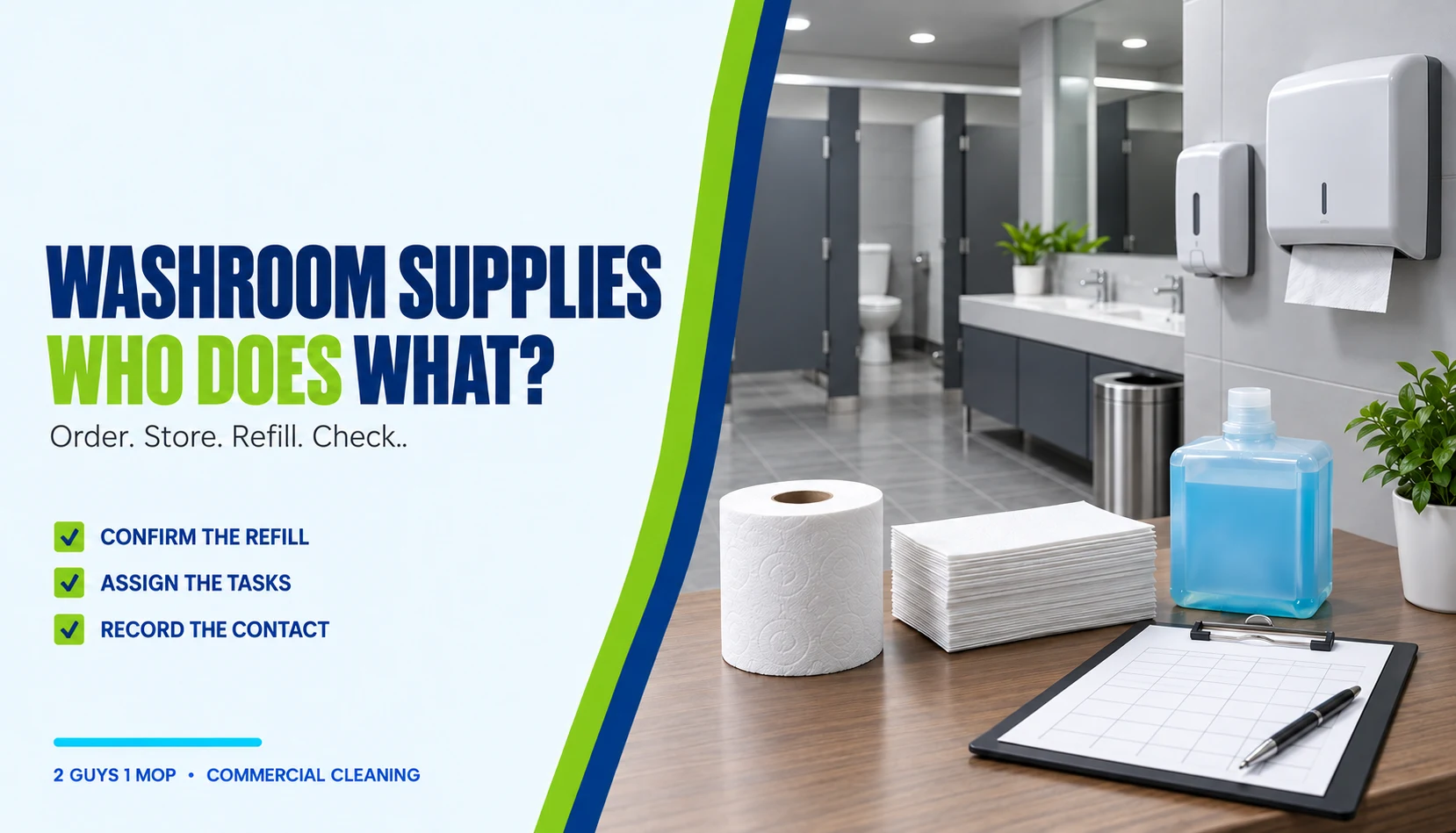
Buying washroom supplies, storing them, refilling dispensers and checking them during the day are separate jobs. Before agreeing to recurring cleaning, name who handles each one. A line that says “washroom cleaning” does not tell you whether paper towels, toilet paper, soap or their replenishment are included in the quoted price.
This guide helps office and facility buyers make those responsibilities visible. Use the worksheet to compare arrangements and record unanswered questions. It does not describe a standard supply policy for every cleaning company.
Separate cleaning products from supplies people use
Start with two lists. Cleaning products and equipment support the agreed cleaning tasks. Washroom consumables are the items occupants use or that need regular replacement: paper products, hand soap and relevant waste liners, for example.
Ask whether the quote covers purchasing each category, handling it at the property, or both. A provider might refill an authorized dispenser using stock supplied by the customer. Another proposal might separately include procurement. Treat these as arrangements to confirm, rather than assumptions about what all providers offer.
The CCOHS workplace housekeeping guide identifies supplies and assigned responsibilities as part of workplace housekeeping. Your written scope still needs to identify who performs the particular tasks at your premises.
Record the dispenser and its approved refill
Make a small inventory before ordering. Record the dispenser location, model if known, existing refill identification and who can authorize a substitute. Do not buy by appearance alone or assume that a similar-looking refill is interchangeable.
Use the manufacturer’s information for the exact unit. For example, Tork’s M2 centerfeed dispenser page identifies its system and compatible products. That is a model-specific example, not a recommendation to buy that dispenser or use its refills in another system.
Ask who is permitted to open locked dispensers. Describe the access arrangement in your scope, but share keys or codes through the agreed secure process rather than putting credentials into a public enquiry or worksheet.
Assign purchasing, storage and replenishment separately
For each item, identify the person or organization responsible for ordering, approving cost and receiving delivery. Then identify who checks the delivered item, where it is stored and who refills the dispenser. These steps may belong to different parties.
Keep the storage description practical: the approved storage area, who can access it, and how a low-stock report reaches the person who can reorder. Record what happens when stock is unavailable at a scheduled visit. Do not silently replace an approved product to make a checkbox look complete.
Hypothetical example: A provider is authorized to refill the paper-towel dispenser, but the site’s storage cabinet is empty. The useful exception is “approved stock unavailable; reorder contact notified,” rather than a general complaint that the room was not cleaned. The purchasing decision and cleaning task need different follow-up.
Cover the hours between cleaning visits
Compare when a dispenser is checked with when people use the washroom. A scheduled refill does not establish who responds if supplies run out later. Name the operating-hours checker and the person they contact when more stock or a repair is needed.
Start with observations instead of a universal refill interval. Record the item, location and time of a shortage, together with the most recent known check. Use those records to agree a site-specific checking and reorder process. This worksheet does not prescribe a minimum stock quantity or service frequency.
Hypothetical example: The dispenser contains the approved paper at the service handoff, then is reported empty after a busy afternoon. Review the operating-hours check and available reserve stock before concluding that a completed scheduled task was missed.
Put costs and exceptions into the proposal
Ask whether consumables are included, separately charged, supplied by you, or excluded. If procurement is offered, ask how purchase approval, substitutions and charges are handled. If you supply stock, ask what the provider records when they cannot refill an authorized unit.
Keep broken dispenser mechanisms, leaks and other maintenance issues separate from ordinary replenishment. Record the responsible maintenance contact. A refill record is not evidence that a faulty dispenser has been repaired.
Use the commercial cleaning contract checklist to review the wider agreement once these details are clear. For the distinction between a visit and later use, see washroom responsibilities between visits in Aurora.
Use a washroom-supply responsibility worksheet
Create one row per item and dispenser. Leave an answer marked “unconfirmed” until the responsible parties agree it.
| Item and dispenser | Approved refill | Orders and pays | Stores stock | Refills unit | Checks between visits | Shortage or fault contact |
|---|---|---|---|---|---|---|
| Toilet paper | ||||||
| Paper towels | ||||||
| Hand soap | ||||||
| Waste liners |
Before accepting a proposal, compare each row with the written scope. Confirm that buying an item, replenishing it and checking it during use are each accounted for. Keep unresolved tasks visible so the next conversation can settle them.
Bring the supply questions to your cleaning enquiry
2 Guys 1 Mop offers walkthroughs upon request. Describe your cleaning requirements and timelines first, and include the supply responsibilities you want to discuss. Confirm the arrangement for your premises rather than assuming procurement or consumables are included.
Review janitorial services in North York or use the service-area directory to find the relevant local information. Then send a commercial cleaning enquiry with the unanswered questions from your worksheet.
Source and worksheet notes
The manufacturer example concerns one dispenser system. The responsibility worksheet and scenarios are original editorial planning tools, not customer cases. No supply-inclusion policy, purchase price, stock minimum or response guarantee is asserted for 2 Guys 1 Mop.