 Fresh Spaces, Happy Faces
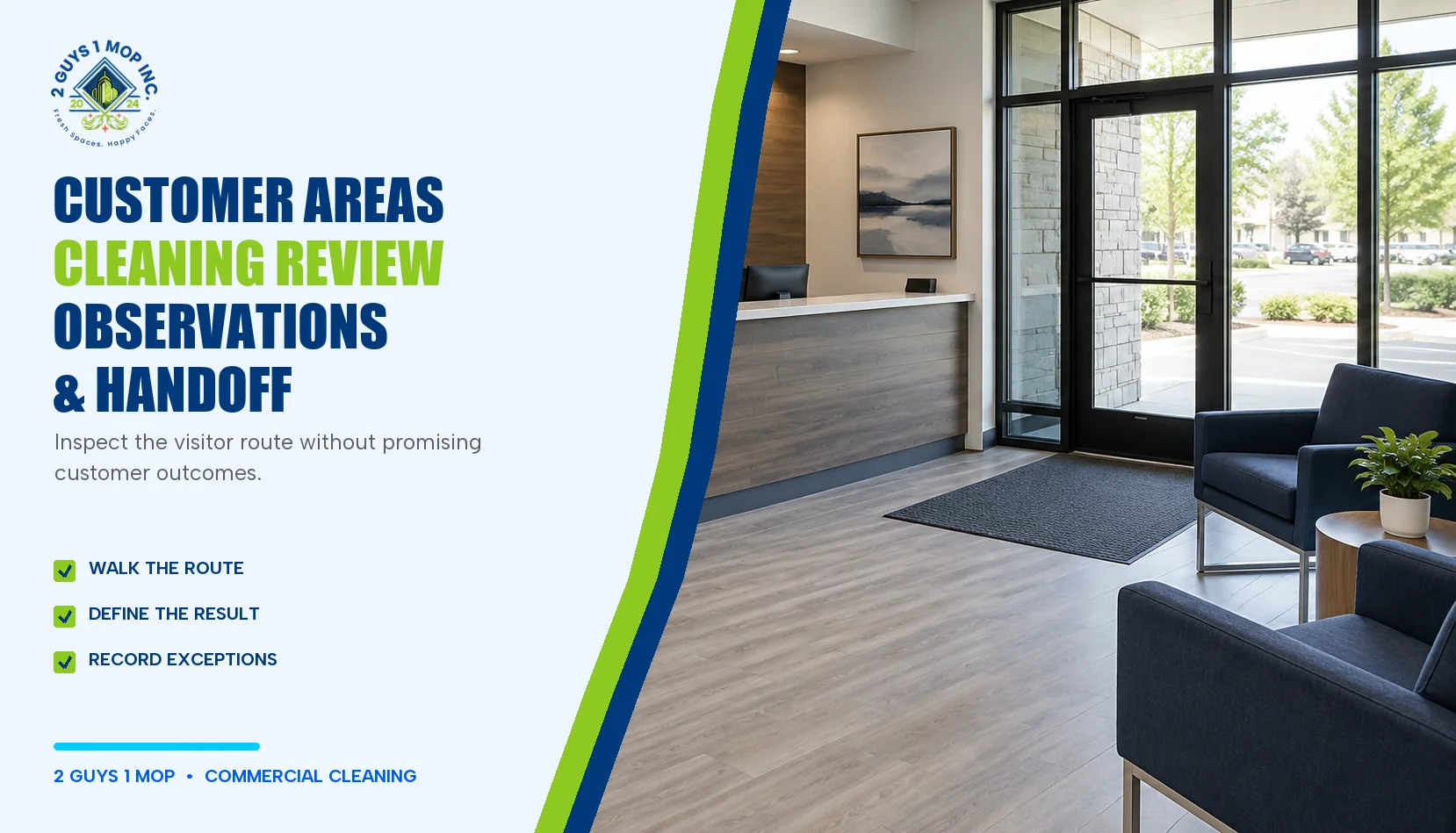
Inspect customer-facing cleaning along the visitor route, from entrance to shared facilities. Use observable surface checks without promising customer trust, sales or retention.
Walk the route a visitor uses
Identify the entrance, reception, waiting area and any shared facilities included in the request. An inspection should describe surfaces and conditions, not assume how every customer interprets them.
- Map the accessible route and the boundaries of the cleaning agreement.
- List glass, counters, seating exteriors and floor zones requested.
- Separate display upkeep and staff preparation from ordinary cleaning tasks.
Choose observable acceptance criteria
Visible ordinary debris, residue and an omitted in-scope task can be recorded. A statement that a room looks welcoming is less useful for comparing completion. Appearance does not establish infection risk or business outcomes.
- Identify the ordinary condition the included task should address.
- Record the inspection time relative to service and visitor use.
- Keep damaged materials and persistent marks distinct from removable soil.
Assign the response while the business is open
New conditions can occur after a scheduled visit. Staff need an authorized procedure for ordinary spills, supplies and route obstructions. Urgent or unfamiliar material follows the workplace process.
- Name who checks visitor areas during occupied periods.
- Specify the permitted ordinary response and reporting contact.
- Report maintenance issues, recurring moisture and unsafe conditions for responsible review.
Correct the specific route issue
For example, entrance residue appearing after arrivals may need a daytime response, while residue remaining after an included clean needs a correction. The record should distinguish those causes. Do not infer lost customers or improved sales from the cleaning log.
- Review the same surface and handoff point when checking a correction.
- Record access limits, supply gaps and non-cleaning exceptions.
- Change the affected task or responsibility before expanding the whole service.
Review customer-facing cleaning responsibilities
Use a North York visitor-readiness checklist. Plan reception checks around busy periods.
Reference: CCOHS workplace housekeeping guide. Use the source for housekeeping responsibilities and inspection; the examples here are editorial planning tools, not observations of your property.
For an ordinary commercial request, review the available cleaning services and bring the relevant access and surface information. Confirm the actual tasks, exclusions and provider capability before agreeing to work.