
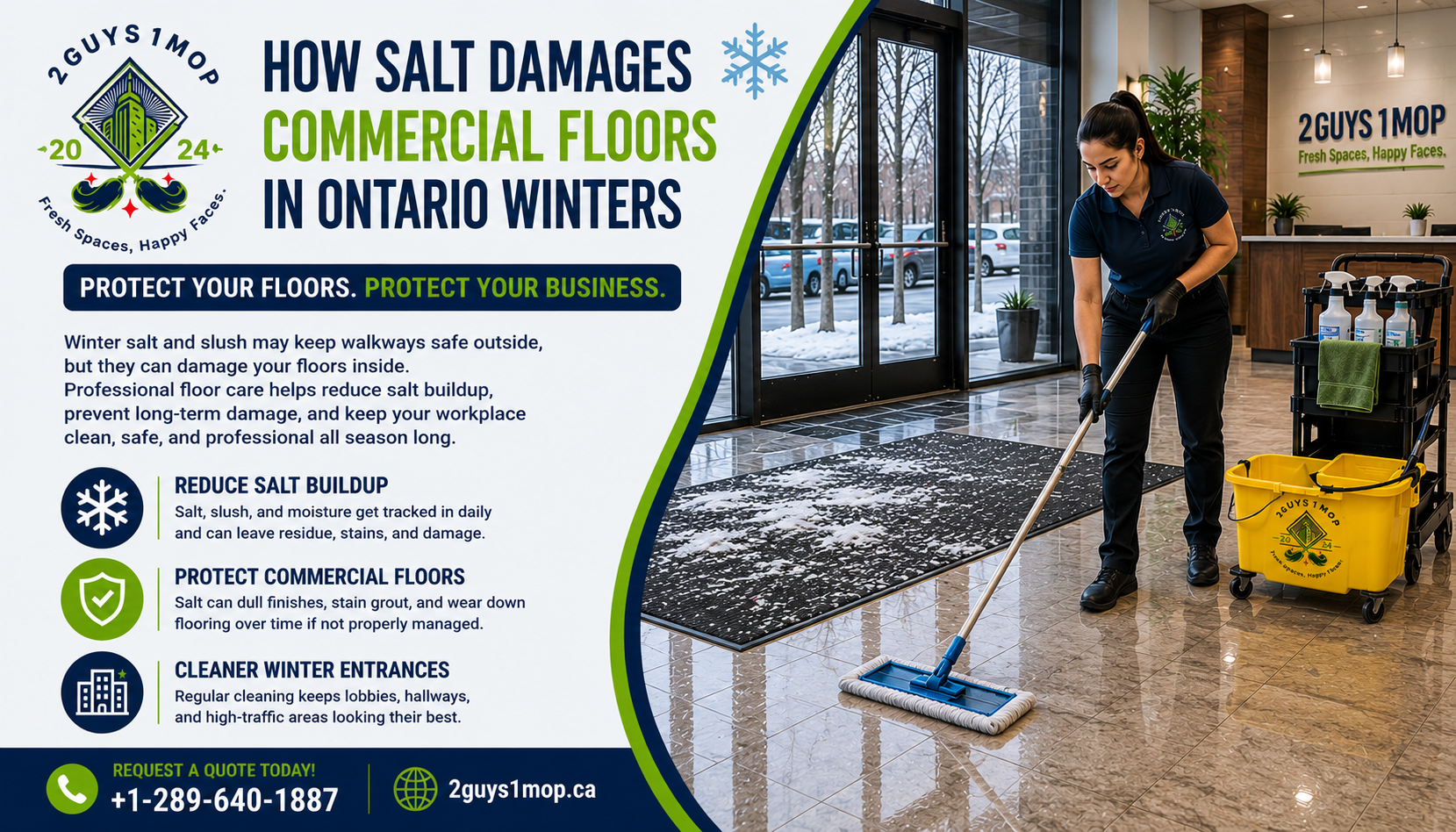
Commercial floor salt damage is a common problem for Toronto businesses during Ontario winters. As employees, customers, tenants, and visitors walk through snow, slush, and salted sidewalks, that residue gets tracked directly into commercial buildings and settles onto flooring throughout entrances, lobbies, hallways, washrooms, elevators, and shared work areas.
At first, salt may only look like a white dusty film on the floor. Over time, it can dull floor finishes, stain carpets, create sticky buildup, and make a building look less maintained than it actually is. Many businesses use professional floor care services during winter to help reduce salt buildup and maintain cleaner commercial floors.
For property managers, office managers, retail owners, and facility teams, winter floor care is not just about appearance. It also affects daily maintenance, first impressions, floor longevity, and how safe and professional the space feels when people walk in.
This guide explains how salt damages commercial floors, what Toronto businesses should watch for, and how a proper winter cleaning plan can help protect flooring throughout the season.
Why This Matters for Businesses
During Ontario winters, salt is used heavily on sidewalks, parking lots, entrances, loading areas, and building walkways. That salt helps reduce ice outside, but once it is tracked indoors, it can become a cleaning and maintenance problem.
Commercial flooring sees much more traffic than residential floors. A small amount of salt brought in by one person may not seem like much, but hundreds of footsteps throughout the day can spread residue across the entire building entrance.
- Salt leaves white residue on hard floors
- Moisture can make entrances slippery
- Carpets can trap salt and dirt
- Floor finishes may become dull faster
- Lobby areas can look dirty even after regular cleaning
Businesses that already use commercial cleaning services often adjust their cleaning schedule in winter because floors need more attention than they do in spring or summer.
The Canadian Centre for Occupational Health and Safety provides workplace safety information that reinforces the importance of maintaining clean and safe working environments.
Common Problems Businesses Experience
Many businesses first notice salt damage near the front entrance. The floor may look cloudy, streaky, or dusty even after it has been mopped. In carpeted areas, salt can leave hardened residue that makes flooring feel rough and worn.
In busy Toronto commercial buildings, the problem often spreads beyond the entrance. Salt can move into elevators, reception areas, office corridors, stairwells, washrooms, and shared workspaces.
- White salt stains on tile, vinyl, and polished flooring
- Cloudy residue that returns after mopping
- Carpet discoloration near entrances
- Moisture buildup around mats and doorways
- Floor finish wearing down faster than expected
- Dirty-looking lobbies during snowy weather
- Salt and grit scratching hard floor surfaces
Businesses with larger entryways, public-facing spaces, or high employee traffic often need more frequent maintenance during winter. This is especially true for offices, retail spaces, medical clinics, gyms, restaurants, and buildings with shared entrances.
Practical Cleaning Recommendations
Professional cleaners usually recommend increasing floor care frequency during winter instead of waiting until the end of the season. Salt is easier to manage when it is removed consistently before it has time to build up.
- Use heavy-duty entrance mats at main doors
- Vacuum or shake out mats regularly
- Mop hard floors more often during snowstorms
- Spot clean salt residue throughout the day when needed
- Use proper floor cleaning products for the floor type
- Schedule deeper floor cleaning after heavy winter weather
- Pay attention to corners, edges, and elevator areas
For businesses with staff kitchens, washrooms, and shared corridors, winter floor care should be part of a larger maintenance plan. Pairing floor cleaning with recurring janitorial services can help keep the entire workplace more consistent during messy weather.
Businesses can also review broader commercial cleaning services to build a cleaning schedule that covers floors, washrooms, kitchens, reception areas, and other high-use spaces.
High-Traffic Areas That Need Extra Attention
Salt damage is usually worst in areas where people enter, stop, turn, or wait. These spots collect more moisture, grit, and residue than the rest of the building.
- Main entrances and vestibules
- Reception and lobby flooring
- Elevator waiting areas
- Hallways near exterior doors
- Stairwell landings
- Washroom entrances
- Employee breakroom walkways
- Retail checkout and customer waiting areas
Commercial properties in busy areas often need a more detailed winter floor plan. Businesses near Willowdale, Bayview Village, and Don Mills may experience heavy daily traffic from employees, visitors, and customers moving through shared entrances.
For businesses with carpeted office spaces, winter salt can also become trapped in carpet fibres. A scheduled commercial carpet cleaning plan can help remove embedded dirt and salt before it becomes more noticeable.
Common Cleaning Mistakes
One common mistake businesses make is using the same floor cleaning routine all year. Winter conditions are different. Floors often need more frequent attention because salt and moisture are constantly being brought inside.
Another mistake is relying only on entrance mats. Mats help, but they do not solve the full problem if they are not cleaned, replaced, or positioned properly.
- Waiting too long between floor cleanings
- Using the wrong cleaning product for the floor surface
- Letting wet mats sit too long
- Ignoring salt residue around floor edges
- Only cleaning the visible centre of the lobby
- Forgetting about elevators, stairwells, and hallways
Businesses with hard flooring may also need periodic deep cleaning services to remove buildup that regular daily mopping cannot fully address.
Local Considerations for Toronto
Toronto winters can be especially hard on commercial floors because weather conditions change quickly. A building may deal with snow in the morning, slush in the afternoon, and refreezing conditions by evening.
That constant freeze-thaw cycle means more salt, more moisture, and more dirt being tracked indoors. Commercial properties with parking lots, sidewalk entrances, underground garages, and shared lobbies often see the highest amount of winter residue.
Businesses in office buildings, medical clinics, retail plazas, restaurants, and fitness facilities should pay close attention to how floors look during January, February, and March. These are often the months when salt buildup becomes most obvious.
Companies that operate across multiple locations can also use the locations page to review service areas and build a cleaning plan that fits their property type.
Benefits of Professional Floor Cleaning
Professional floor care helps businesses stay ahead of winter buildup instead of constantly reacting to dirty entrances and cloudy floors. A proper maintenance routine can make a noticeable difference in how a building looks throughout the season.
- Helps reduce salt residue and winter grime
- Improves lobby and entrance presentation
- Helps protect floor finishes
- Supports cleaner customer-facing areas
- Reduces the workload on internal staff
- Helps flooring look more professionally maintained
Professional cleaning is especially helpful for businesses with regular customer visits or shared tenant spaces. First impressions matter, and floors are one of the first things people notice when they walk into a commercial building.
The Government of Canada provides public health and safety information that supports the importance of maintaining clean indoor environments.
When Businesses Should Use Professional Cleaning Services
Professional floor care is especially useful when salt residue keeps returning, floors look dull shortly after cleaning, or entrance areas become difficult to manage during snowy weather.
Businesses should also consider professional support if they have high visitor traffic, multiple entrances, carpeted areas near doorways, or staff who do not have time to manage winter cleaning throughout the day.
For ongoing workplace upkeep, businesses can explore the commercial cleaning blog, review frequently asked questions on the FAQ page, or learn more about the company on the about page.
Final Thoughts + CTA
Commercial floor salt damage is one of the most common winter maintenance problems for Toronto businesses. Salt, slush, and moisture can quickly affect floor appearance, create residue, and make commercial spaces look less professional during the busiest winter months.
A consistent winter floor care plan helps reduce buildup, protect flooring, and keep entrances, lobbies, and shared spaces looking cleaner throughout the season.
If your business needs help managing winter salt buildup or recurring commercial floor care, request a quote today and create a cleaning plan tailored to your commercial property.