
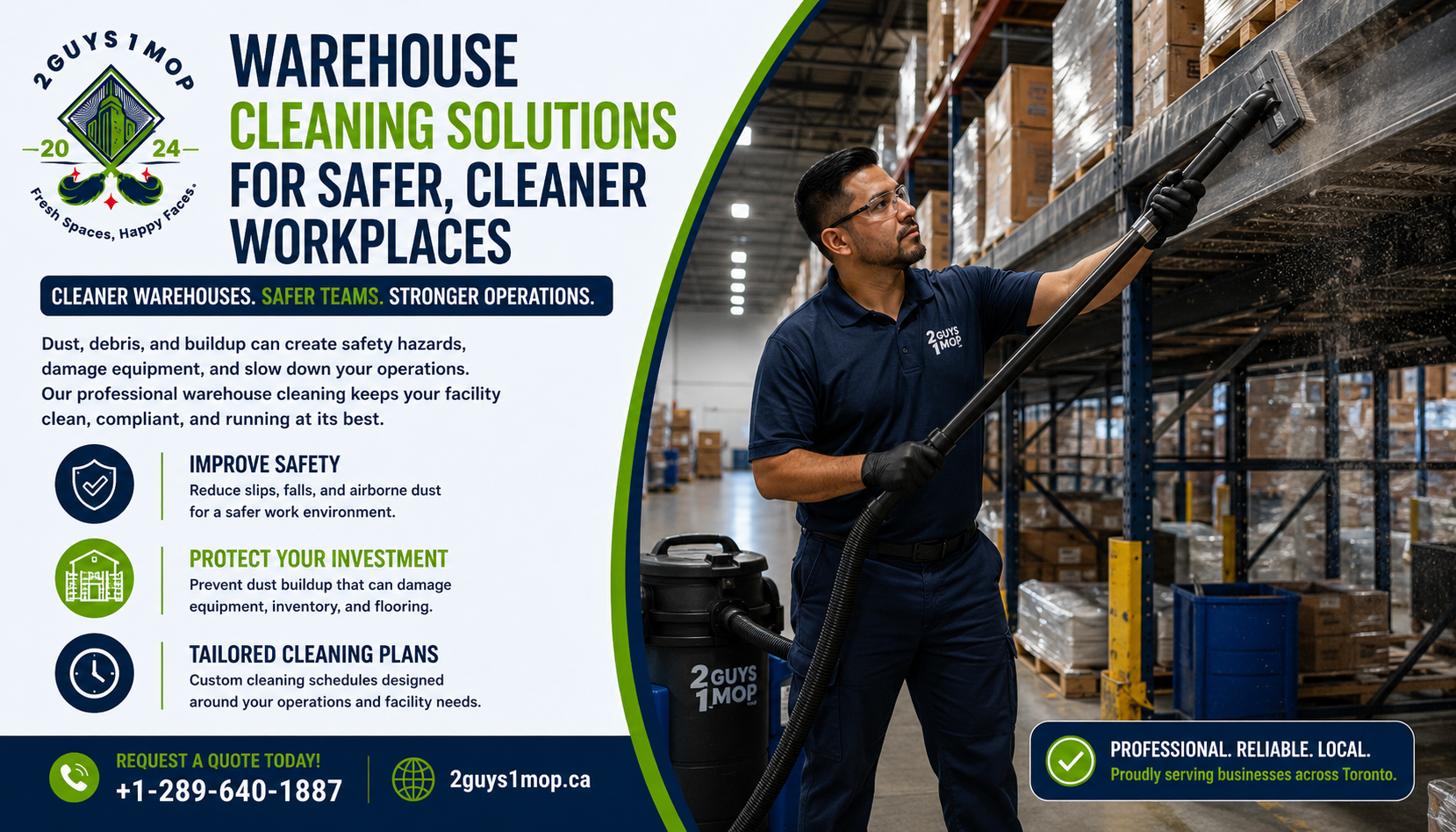
Warehouse cleaning Toronto businesses rely on is not just about making the building look presentable. In active warehouse environments, dust can build up quickly on floors, shelving, equipment, loading areas, employee walkways, and hard-to-reach surfaces. When it is ignored, that dust can start affecting employee safety, indoor air quality, product handling, and daily operations.
For many warehouse managers, dust feels like a normal part of the job. There are trucks coming in and out, pallets being moved, cardboard breaking down, forklifts stirring up floor debris, and exterior dirt being tracked inside throughout the day. But normal does not mean harmless. A warehouse can still operate efficiently while having a proper dust control and cleaning plan in place.
At 2 Guys 1 Mop, we see this often in commercial and industrial spaces. Dust usually starts as a small maintenance issue, then becomes a bigger safety and appearance problem once it collects in traffic lanes, on high surfaces, around racking, and near employee work areas.
Why Warehouse Dust Matters for Businesses
Dust in a warehouse does more than sit on the floor. It moves through the space every time a bay door opens, a forklift passes through, a pallet is dragged, or a fan pushes air across the building. Over time, this can create a cycle where the same dust keeps settling and being kicked back up again.
For employees, this can lead to more irritation during the workday. Dust may affect eyes, throats, breathing comfort, and general workplace cleanliness. For managers, it can create complaints, affect inspections, make the facility look poorly maintained, and increase wear on floors and equipment.
A professional commercial cleaning service can help reduce these issues by focusing on the areas where dust collects most often, not just the spaces that are easiest to see.
Common Problems Businesses Experience With Warehouse Dust
Dust problems usually show up gradually. A facility may look fine at the beginning of the week, then by Friday the floor edges, corners, and loading areas look neglected. This is especially common in warehouses that handle cardboard, packaging materials, construction supplies, dry goods, parts, or products that move through open dock areas.
- Dust collecting along floor edges, corners, and under racking
- Fine debris building up around shipping and receiving areas
- Cardboard fibres collecting near packing stations
- Footprints and tire marks becoming more visible on dusty floors
- Dust settling on inventory, shelving, desks, and employee workstations
- Airborne dust being stirred up by forklifts or floor fans
- Dirty entrance mats that stop working because they are overloaded with debris
One issue we often notice is that businesses clean the main open floor but miss the edges. That is where dust hides. When the floor scrubber or mop does not reach under shelving, behind pallets, beside columns, or along walls, buildup keeps coming back.
For businesses looking at broader facility upkeep, our commercial cleaning services can be adjusted depending on the building layout, traffic level, floor condition, and cleaning frequency required.
How Dust Can Affect Employee Safety
Warehouse safety depends on clear walkways, clean work zones, proper visibility, and floors that are not covered in loose debris. Dust may seem minor compared to larger hazards, but it can contribute to everyday risks when it is left unmanaged. Businesses can also review Ontario workplace health and safety guidance when building internal safety procedures around housekeeping, floor conditions, and employee work areas.
Fine dust on smooth floors can make surfaces feel slick, especially near entrances, receiving doors, and areas where moisture is also present. In winter, Toronto warehouses can also deal with salt, slush, and grit being tracked inside from parking lots and loading zones. When that mixes with regular warehouse dust, it can create dirty floor film and heavier residue.
Dust can also reduce visibility on safety markings. Painted lines, caution areas, pedestrian walkways, and floor labels are harder to notice when they are covered in dirt. In busy warehouses, small visibility issues matter because employees are often working around moving equipment, carts, forklifts, and deliveries.
The Canadian Centre for Occupational Health and Safety provides helpful workplace safety information for businesses that want to better understand dust-related workplace hazards. Health Canada also shares guidance on air quality and health, which is useful when thinking about dust, ventilation, and employee comfort in enclosed work environments. For cleaning support inside your facility, you can also contact 2 Guys 1 Mop to discuss the areas causing the most concern.
Practical Cleaning Recommendations for Warehouses
A warehouse cleaning plan should be realistic. It needs to match the way the facility actually operates. A light-use storage area does not need the same routine as a busy shipping facility with daily truck traffic. The best approach is to separate cleaning tasks by frequency and priority.
- Daily: remove loose debris from main walkways, entrances, packing areas, and employee access routes.
- Weekly: clean corners, floor edges, loading zones, washrooms, lunchrooms, and office-connected areas.
- Monthly: focus on deeper dust removal around racking, baseboards, doors, equipment edges, and harder-to-reach areas.
- Seasonally: address winter salt residue, floor scrubbing, mat replacement, and higher dust accumulation after busy operating periods.
Warehouses with polished concrete, sealed concrete, epoxy flooring, or tile may also benefit from scheduled floor care. Dust is easier to manage when floors are properly maintained and not covered in layers of residue. For facilities dealing with floor marks, dust film, and tracked-in dirt, scheduled cleaning support can help keep conditions more consistent.
High-Traffic Areas That Need Extra Attention
Not every part of a warehouse gets dirty at the same pace. Most dust and debris problems start in a few predictable areas, then spread across the facility as people and equipment move through the building.
Loading Docks and Bay Doors
Loading areas usually collect the most exterior dirt. Truck traffic, open doors, wind, salt, packaging debris, and pallet movement all contribute to buildup. If these areas are not cleaned regularly, dust gets carried deeper into the warehouse.
Packing and Shipping Stations
Cardboard dust, label backing, tape scraps, plastic pieces, and small debris often collect around packing tables. These areas can start looking messy even when the rest of the warehouse is in good shape.
Employee Walkways
Employee walkways should stay clear and easy to identify. Dust and debris can make walkways look poorly maintained and may reduce the visibility of safety lines or directional markings.
Warehouse Offices and Lunchrooms
Dust often travels from the warehouse into connected offices, lunchrooms, and washrooms. Staff may notice dusty desks, dirty floors, fingerprints on glass, or grit near doorway transitions. These areas still need regular cleaning because they affect employee comfort and the impression visitors get when entering the building.
Businesses can review related cleaning topics on the 2 Guys 1 Mop blog, where we share practical advice for commercial spaces, office areas, washrooms, entrances, floors, and high-traffic workplaces.
Common Warehouse Cleaning Mistakes
Most warehouse dust problems are not caused by a complete lack of cleaning. They usually happen because the cleaning routine is too surface-level or too inconsistent for the amount of activity in the building.
- Only cleaning visible open areas: Dust along edges, corners, racking, and columns eventually spreads back into the main floor.
- Using the wrong tools: Dry sweeping can push fine dust into the air instead of removing it properly.
- Ignoring entrance mats: Dirty mats stop trapping debris and start spreading it into the building.
- Skipping high surfaces: Dust on beams, ledges, shelving, and equipment can settle back down after the floor is cleaned.
- Waiting too long between deep cleans: Once dust becomes layered, routine cleaning takes longer and produces weaker results.
- Not adjusting for seasons: Toronto winter conditions can increase salt, grit, moisture, and floor residue.
Another common mistake is treating every warehouse the same. A facility with frequent deliveries, heavy forklift use, and open bay doors needs a different cleaning plan than a storage warehouse with limited daily traffic. That is why it helps to work with a company that understands different service areas and commercial cleaning needs.
Local Considerations for Toronto Warehouses
Toronto warehouses deal with a mix of urban dust, traffic pollution, construction activity, winter salt, and frequent deliveries. In industrial pockets, dust can collect faster because exterior areas are often busy with trucks, loading activity, and nearby road traffic.
During Ontario winters, salt and slush can be a bigger issue than many businesses expect. Employees may track it through pedestrian doors, while forklifts and pallet jacks carry grit from loading zones. Once the moisture dries, residue is left behind on the floor. If it is not removed properly, it can leave a dull film and make the warehouse look dirtier than it actually is.
In spring and summer, open doors and increased ventilation can bring in more dust from outside. Facilities near construction, roadwork, or high-traffic areas may notice dust returning quickly even after routine cleaning. This does not always mean the cleaning was done poorly. It often means the cleaning frequency or method needs to be adjusted to the building conditions.
For businesses comparing cleaning options, our company background and approach to commercial cleaning explain how we support workplaces that need practical, reliable service instead of a one-size-fits-all routine.
Benefits of Professional Warehouse Cleaning
Professional warehouse cleaning helps create a more controlled environment. It does not remove every speck of dust forever, because active warehouses will always produce some debris. What it does is reduce buildup, improve consistency, and help prevent small cleaning issues from becoming larger operational concerns.
- Cleaner walkways and employee traffic areas
- Reduced dust buildup around racking and floor edges
- Better appearance for visitors, vendors, and staff
- Less dirt being tracked into offices, lunchrooms, and washrooms
- Improved floor appearance and easier ongoing maintenance
- More consistent cleaning standards across the facility
For many property managers and operations teams, the biggest benefit is not having to chase the same cleaning problems every week. A proper routine gives the facility a cleaner baseline. That makes it easier to spot spills, damage, safety concerns, and areas that need extra attention.
Questions about frequency, scope, and cleaning priorities can often be answered before service begins. Our FAQ page covers common service questions, and our team can also recommend a plan based on the size and condition of your space.
When Businesses Should Use Professional Cleaning Services
Some warehouses can manage light daily cleanup in-house, especially if employees are responsible for keeping their own workstations clear. But there are times when professional cleaning makes more sense.
- Dust returns quickly after regular sweeping
- Employees complain about dirty floors, dust, or air quality discomfort
- Loading areas are spreading dirt into the main warehouse
- Offices, washrooms, and lunchrooms are becoming dusty from warehouse traffic
- Floor markings are harder to see because of buildup
- The facility is preparing for inspections, client visits, or operational changes
- The business wants a more consistent cleaning schedule
Professional cleaners usually recommend starting with the highest-impact areas first: entrances, loading zones, employee walkways, washrooms, lunchrooms, and the areas where dust collects along edges. From there, the cleaning plan can be adjusted based on traffic, season, and budget.
If your warehouse needs a cleaner, safer, more professional-looking space, 2 Guys 1 Mop can help build a practical plan around your facility. You can request a quote and let us know the size of the warehouse, the main dust concerns, the type of flooring, and how often cleaning is needed.
Final Thoughts
Warehouse dust is easy to overlook because it becomes part of the background. But when it builds up, it can affect employee safety, floor appearance, air comfort, product handling, and the overall impression of the facility. A cleaner warehouse supports smoother operations and shows employees that the workplace is being properly maintained.
For Toronto businesses, the best approach is usually a mix of routine cleaning, targeted dust control, seasonal floor care, and practical attention to high-traffic areas. The goal is not to make the warehouse perfect every second of the day. The goal is to keep dust under control before it creates bigger problems.