 Fresh Spaces, Happy Faces
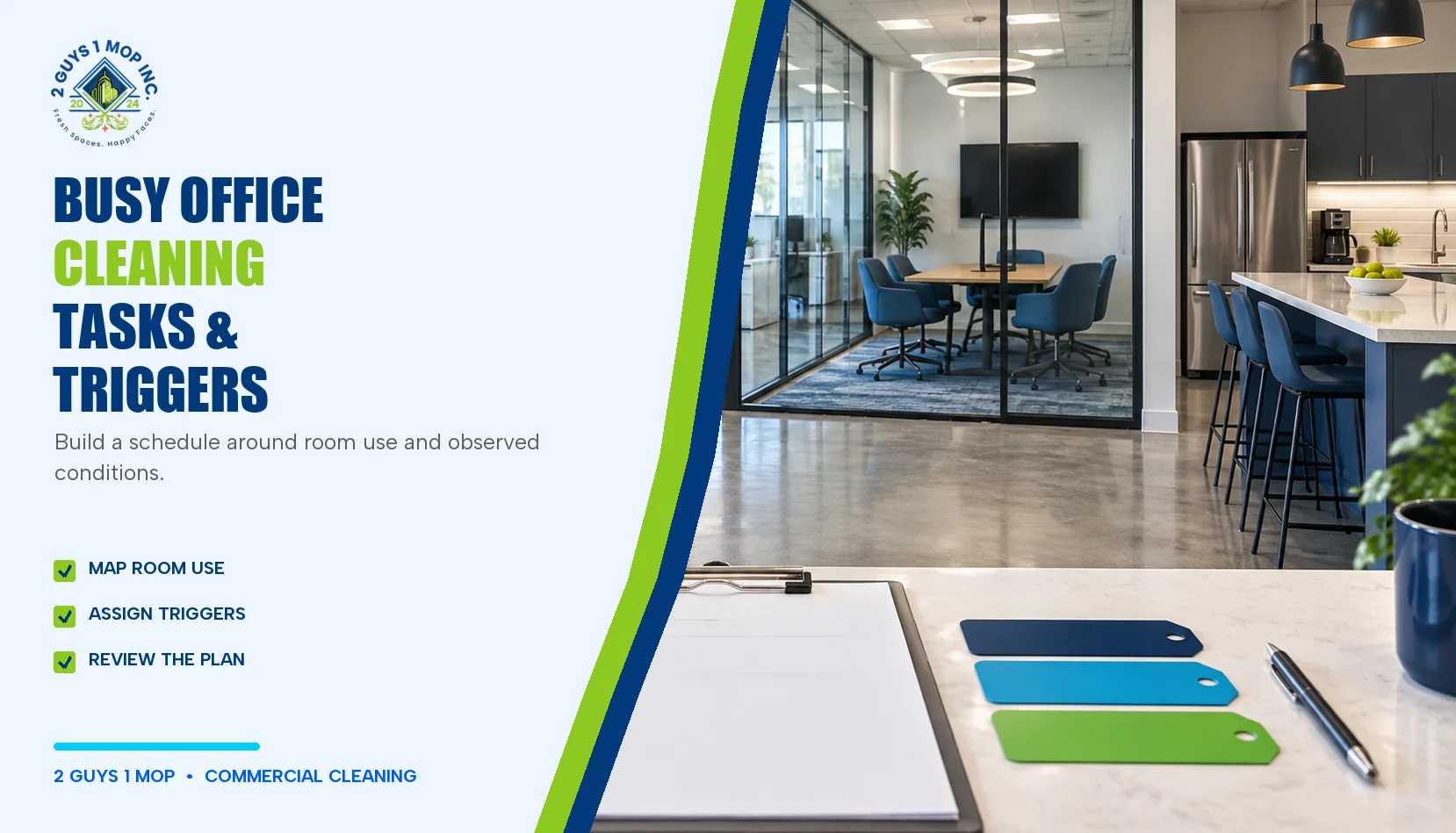
Build a busy-office cleaning schedule from room use, task demand and inspection findings. Assign routine work, periodic details and urgent responses separately.
Map demand before counting visits
An office with meeting turnover, shared kitchens and visitor arrivals does not create the same demand in every room. Describe how each zone is used and when its condition changes. Headcount is useful context, but it is not a complete cleaning specification.
- Record meeting-room bookings, entrance traffic, shared-space use and operating hours.
- Identify the rooms that can be released during the day and those available only later.
- List who handles spills, full bins or supply shortages between contracted visits.
Put tasks into three scheduling lanes
Use recurring visits for the agreed routine, a rotation for details that require separate access, and condition triggers for exceptions. These lanes organize responsibility; they do not prescribe daily, weekly or monthly cleaning for every building.
- Recurring scope: list each room and its observable waste, surface or floor result.
- Periodic details: record reachable edges, interior glass or other authorized work with its own interval.
- Condition response: assign a fresh spill, unexpected event mess or blocked access to a named person.
Protect the time needed for the actual work
A visit can be frequent yet too narrow to address a recurring issue. Compare the task list and available access rather than assuming a larger visit count improves every result. Material instructions and facility procedures still govern methods.
- Check whether occupants must clear desks, counters or floor routes before arrival.
- Plan reopening and drying conditions when floor work affects an occupied route.
- Keep maintenance, ventilation, pest concerns and specialist sanitation outside ordinary task assumptions.
Review exceptions with the schedule
For example, a shared kitchen may need a staff reset after lunch even when the contracted clean takes place at night. Add that responsibility explicitly. Do not label the whole nightly service unsuccessful because use continues after it finishes.
- Compare conditions at the same inspection point rather than at random times.
- Adjust the room or task that fails early before changing every visit.
- Record agreed changes and review their effect on the actual observed problem.
Review busy office cleaning schedule responsibilities
Compare daily and weekly task patterns. Audit the rooms and tasks in the chosen schedule.
Reference: CCOHS workplace housekeeping guide. Use the source for housekeeping responsibilities and inspection; the examples here are editorial planning tools, not observations of your property.
For an ordinary commercial request, review the available cleaning services and bring the relevant access and surface information. Confirm the actual tasks, exclusions and provider capability before agreeing to work.