 Fresh Spaces, Happy Faces
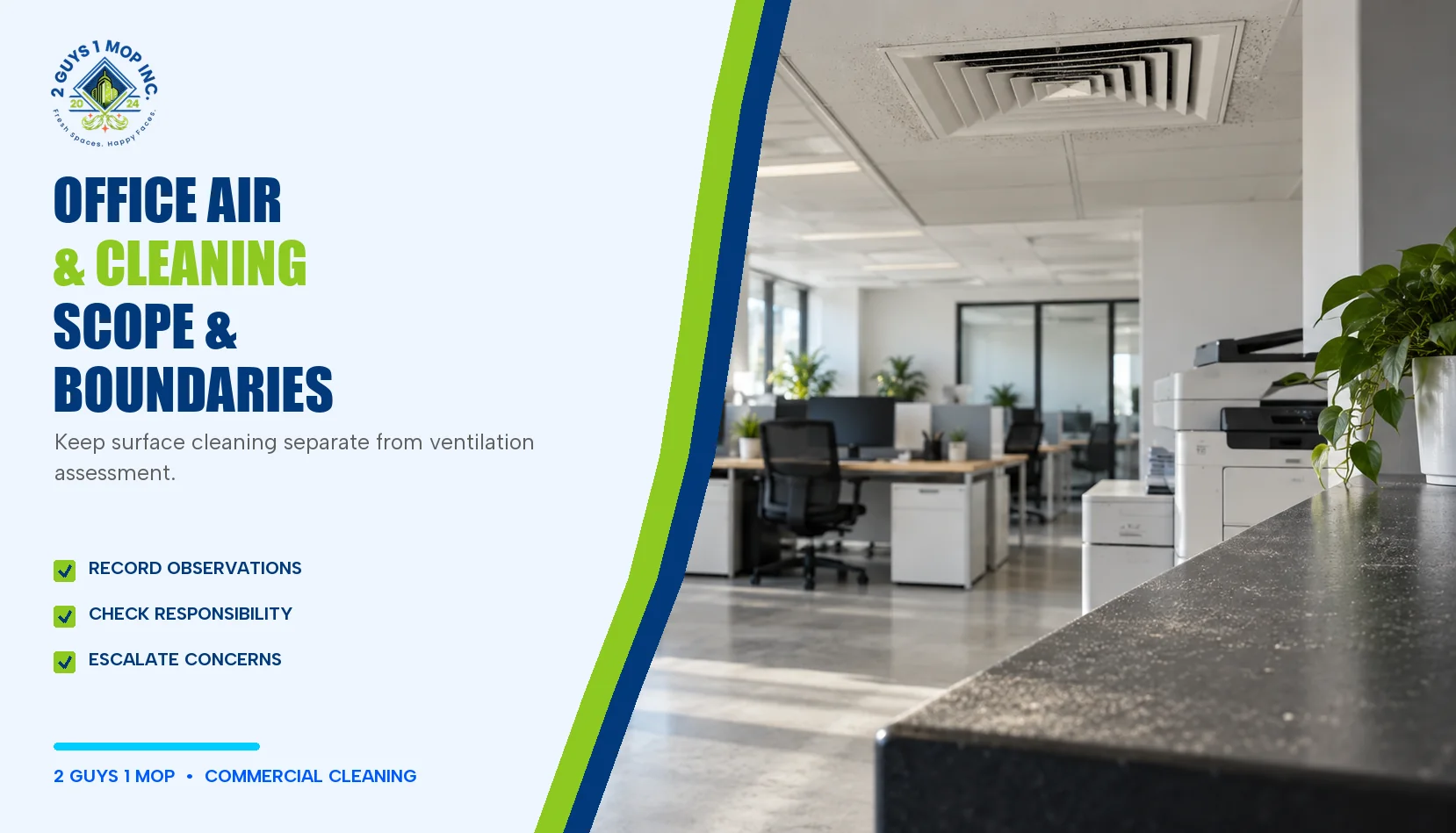
Separate office surface-cleaning tasks from indoor-air assessment. Record dust, odour or moisture observations and assign ventilation or environmental concerns to the appropriate professional.
Do not use surface dust as an air-quality test
A dusty ledge is an observation of that surface. It does not identify airborne concentrations, a health cause or the condition of the ventilation system. Health Canada’s office-building guidance treats indoor air as a multi-factor building issue, not a cleaning-only diagnosis.
- Record locations, times and relevant changes in use or building work.
- Send occupant concerns through the workplace’s established reporting process.
- Keep private health or personnel details out of a general cleaning inspection log.
Define the ordinary housekeeping tasks
Accessible surfaces, permitted floor care and included grille exteriors can be described in the cleaning scope. Inside ducts, filters, mechanical equipment or electrical systems require a separate responsible process. Do not assume a janitorial visit includes HVAC work.
- Name the reachable ledges, surfaces and floor zones requested.
- Specify whether equipment or grille exteriors are included and under what restrictions.
- Assign safe access and keep equipment internals outside ordinary cleaning assumptions.
Report concerns that cleaning cannot establish
Repeated moisture, unusual odours, suspected mould or ventilation faults need the building contact’s review. Products, furnishings, renovations and occupancy may also be relevant. The cleaner can report observations without promising allergen removal or healthier air.
- Separate ordinary soil from unknown deposits and controlled materials.
- Avoid recommending filter changes or ventilation adjustments without system assessment.
- Record the relevant building or specialist follow-up alongside the cleaning exception.
Review completion and investigation separately
For example, accessible ledges can meet their cleaning scope while an airflow concern remains unresolved. Keep both items visible under different owners. A cleaner-looking office does not demonstrate improved indoor-air measurements.
- Check the defined accessible tasks and recurring ordinary dust patterns.
- Confirm that specialist concerns reached the responsible contact.
- Adjust housekeeping from observations while leaving environmental conclusions to suitable assessment.
Review office air quality and cleaning responsibilities
Use the ordinary dust diagnostic route. Define accessible office housekeeping tasks.
Reference: Health Canada office-building indoor-air guidance. Published in 2025, this guidance covers building stewardship, ventilation and assessment responsibilities. Provider equipment, qualifications and site outcomes must be verified separately.
For an ordinary commercial request, review the available cleaning services and bring the relevant access and surface information. Confirm the actual tasks, exclusions and provider capability before agreeing to work.