 Fresh Spaces, Happy Faces
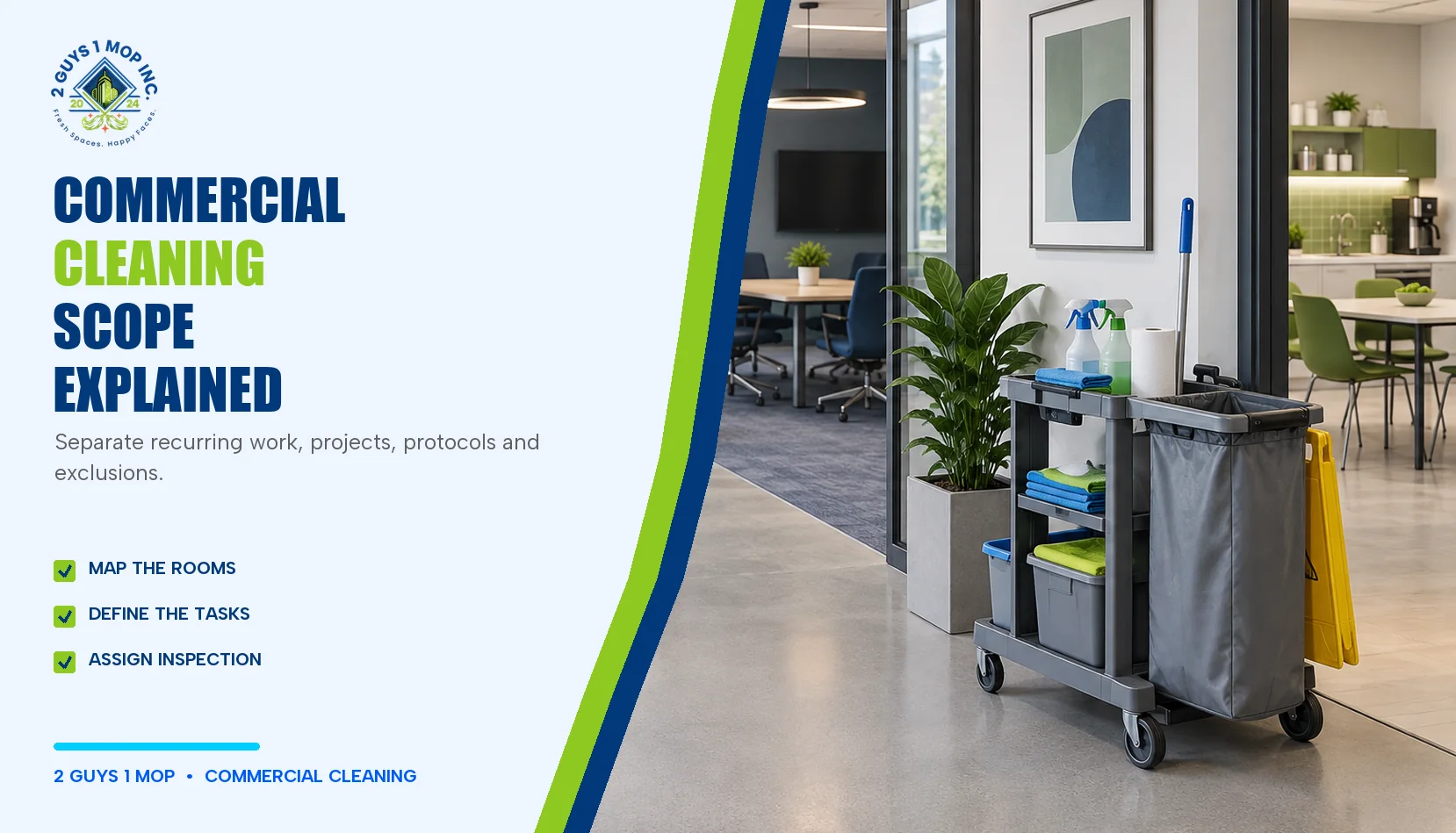
Commercial cleaning means cleaning work for business premises. The actual service is defined by the agreed scope: rooms, surfaces, tasks, timing, methods and responsibility. It is not a standard package that automatically includes every form of cleaning, maintenance or specialist work.
This explainer helps North York business owners organize a service brief. For available service categories, review the North York commercial cleaning page, then confirm inclusions and capability for your property.
Recurring tasks form one part of the scope
A recurring visit may include agreed reachable surface cleaning, ordinary waste removal, floors, washrooms and shared rooms. The proposal should name the tasks rather than relying on a phrase such as full office clean. Supplies, restocking, dishes and personal-item handling need explicit responsibility.
- Area: where the work will take place.
- Task: what will be done to the named surface or room.
- Timing: scheduled interval or observed-condition trigger.
- Access: what must be cleared or released first.
- Inspection: what the assigned contact will check.
The office cleaning inclusions guide develops those questions for offices.
Periodic projects need their own material decisions
Carpet extraction, upholstery treatment, detailed floor work and other projects may need separate assessment, pricing, access and drying arrangements. Record the material and manufacturer instructions before selecting a method. Routine cleaning is not automatically a restoration treatment.
Example: a recurring floor visit can address agreed ordinary soil, while damaged finish or a persistent stain may require assessment outside that scope. Record the condition rather than promising that more cleaning will repair it.
Facility-specific protocols change the discussion
Offices, retail spaces and clinics use rooms differently. Identify who owns the applicable policy and what restrictions it creates. For healthcare premises, the clinic’s responsible lead should define environmental-cleaning requirements, training, product choices and escalation boundaries.
Keep clinical equipment, sharps, clinical waste, hazardous substances, industrial machinery and elevated access outside a general janitorial assumption. Confirm specialist capability separately. Neither a commercial-cleaning label nor a quote establishes qualification for those tasks.
Frequency comes from room use and inspection
Choose task timing from occupancy, traffic, observed conditions, material guidance and facility requirements. Separate incident response during occupied hours from scheduled visits. The zone-by-zone frequency guide explains why one calendar interval need not govern every task.
For a shared meeting room, specify the next-use condition and who clears items. For a waste point, define the inspection trigger and daytime owner. These are planning examples, not universal schedule recommendations.
Inspection distinguishes cleaning from maintenance
The CCOHS housekeeping guide includes maintenance, assigned duties and inspection. Use those separate roles in the brief: the cleaning provider addresses agreed soil; the maintenance owner addresses leaks or damage; the facility lead manages safety requirements.
Record missed work, inaccessible areas and new conditions separately. A presentable space does not prove fewer illnesses, increased productivity, lower lifetime costs or safety clearance. Evaluate the service tasks directly.
Compare proposals on the same basis
Give each provider the same room list, task requirements and access conditions. Compare supplies, exclusions, periodic projects, inspections, corrections and terms alongside price. Ask for evidence of any capability or credential important to the work.
Use the provider-selection checklist for that purchasing step. This explainer defines the categories; the selection guide compares proposals.
Define the scope your facility actually needs
Group the work into recurring tasks, periodic projects, facility-specific protocols and exclusions. Assign access and inspection owners, then bring the list to a quote discussion. Revisit it when occupancy or room use changes so the agreement continues to describe the actual property.