 Fresh Spaces, Happy Faces
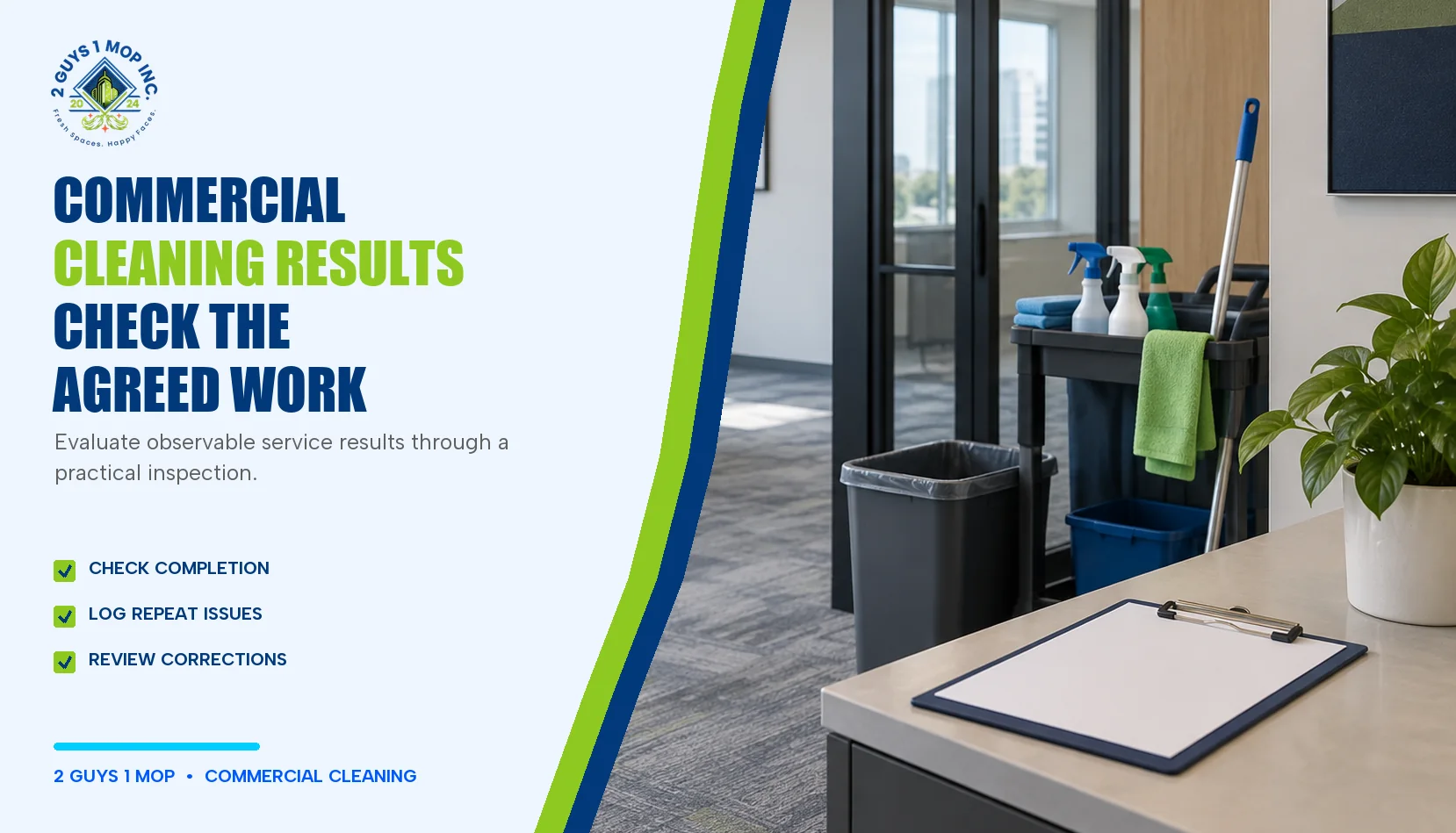
The useful benefits of a cleaning arrangement should be assessed against your facility’s needs and the work you agreed to buy. Start with observable service results: specified waste removed, reachable surfaces addressed, rooms prepared for their next use and exceptions reported. Those checks provide a basis for a service review.
This guide is for evaluating an existing arrangement in North York. It complements the commercial cleaning scope explainer, which defines the work before it is purchased.
Choose checks that match the agreed task
- Waste: compare the named bins and removal requirements with the completed work.
- Shared surfaces: inspect agreed reachable areas under normal use conditions.
- Floors: review the specified ordinary soil and note stains or damage separately.
- Rooms: check the next-use condition at the agreed handoff.
- Exceptions: confirm restricted access or excluded work has reached the correct owner.
Avoid a single score such as looks clean for everything. It can conceal a full bin, inaccessible desk or damaged fixture that needs a different response. A presentation check also cannot confirm that a required disinfection procedure was completed.
Distinguish a missed task from a new condition
Record inspection time, last service and activity since then. Example: a bin that fills after a large meeting may need a daytime response; a bin left full immediately after an agreed service needs a missed-task review. Those are different findings.
Use the office inspection checklist to establish a repeatable route. Keep the route practical enough for the assigned contact to use consistently.
Review recurring issues and corrections
Keep a short log with the location, condition, agreed task, access and correction owner. Check whether the same issue recurs after the correction. Where access or room use has changed, revise the scope rather than treating the old agreement as a complete description of the new situation.
The CCOHS housekeeping framework includes assigned responsibilities and inspection. These principles support the review process; they do not verify this business’s methods or performance.
Keep wider outcomes separate from service evidence
A cleaning inspection does not by itself demonstrate fewer illnesses, better morale, higher productivity, stronger customer confidence or lower long-term costs. Those outcomes have other contributors and need their own evidence. Do not treat appearance as a proxy for all of them.
If the question concerns an observed workflow interruption, use the workplace-friction observation guide. If it concerns presentation, use the visitor-route inspection guide. Each addresses a defined task without promising the wider outcome.
Assess schedule and periodic work separately
Match recurring timing to observed conditions and room use. Confirm the provider’s actual availability before planning after-hours work. The frequency guide offers a planning framework rather than a universal timetable.
Periodic carpet, upholstery or floor projects need material guidance, a defined objective and their own acceptance criteria. Record damage and maintenance exclusions separately. Do not assume that a project will extend every material’s life or pay for itself.
Evaluate cleaning through observable service results
Bring the agreed task list, inspection log and recurring exceptions to the service review. Decide which responsibilities, methods or timing need revision. If you are considering a new arrangement, use the same evidence when discussing the North York service scope. Ask what can be delivered and how it will be checked.