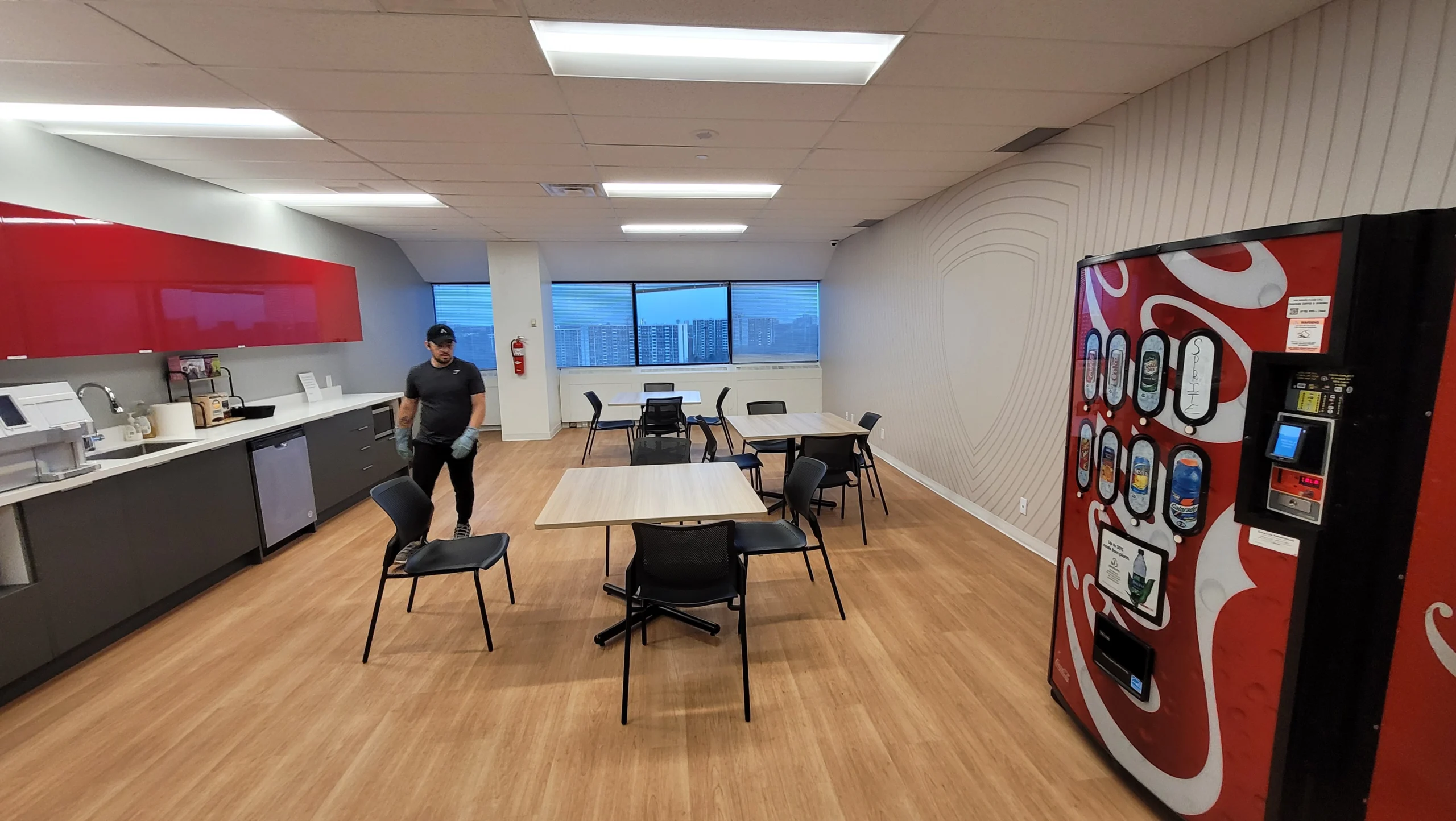
Breakroom cleaning checklist North York businesses use is essential for maintaining a clean, hygienic, and professional workplace. Breakrooms are high-traffic areas where employees eat, prepare food, store personal items, and gather throughout the day, which means they can quickly collect crumbs, spills, bacteria, odors, and clutter if they are not cleaned consistently.
Unlike private workstations, breakrooms are shared by many people. Counters, tables, appliance handles, sinks, cabinet doors, garbage bins, and fridge handles are touched repeatedly. That is why many businesses rely on professional office cleaning services to keep these spaces clean and ready for daily use.
If your workplace is reviewing its cleaning routine, comparing your current process with commercial cleaning services can help you understand what should be included in a complete breakroom cleaning plan.
This guide outlines a practical breakroom cleaning routine North York workplaces can follow, including daily, weekly, and deep cleaning tasks, common mistakes to avoid, and ways to connect breakroom cleaning with overall workplace hygiene.
Why Breakroom Cleaning Matters in Office Spaces
Breakrooms are one of the most frequently used spaces in an office. Because they involve food, drinks, garbage, shared appliances, and employee traffic, they often require more attention than standard desk areas.
Following a breakroom cleaning checklist North York businesses rely on helps prevent food residue, odors, bacteria buildup, and visible mess from affecting the workplace. A cleaner breakroom also improves employee comfort and reflects better overall management.
- Reduces bacteria and contamination
- Prevents odors from food and garbage
- Keeps appliances cleaner and more usable
- Improves employee comfort during breaks
- Supports a cleaner and more professional workplace
- Helps prevent pests caused by crumbs and food debris
The Canadian Centre for Occupational Health and Safety (CCOHS) emphasizes the importance of proper cleaning routines in shared workplace environments.
Daily Breakroom Cleaning Checklist North York Offices Should Follow
Daily cleaning is the foundation of a clean breakroom. These tasks focus on visible mess, high-touch surfaces, food areas, and garbage control.
- Wipe down tables, counters, and eating surfaces
- Clean microwave handles and appliance exteriors
- Sanitize sink areas, faucets, and counters
- Empty garbage bins and replace liners
- Clean spills, crumbs, and food residue
- Wipe cabinet handles, fridge handles, and drawer pulls
- Sweep or mop visible debris from floors
- Check paper towels, soap, and other supplies
Daily cleaning helps prevent small messes from becoming larger sanitation issues. It also keeps the breakroom more comfortable for employees and reduces complaints about odors, sticky counters, or overflowing garbage.
Weekly Cleaning Tasks for Breakroom Areas
Weekly cleaning focuses on deeper areas that may not need attention every day but still affect hygiene, odor control, and presentation.
- Clean inside microwaves and shared appliances
- Disinfect fridge doors, handles, and exterior surfaces
- Wipe cabinet fronts, walls, and backsplashes
- Clean baseboards, corners, and floor edges
- Remove food debris from under tables and chairs
- Disinfect shared coffee machines and water stations
- Check for expired or abandoned food in shared areas
For busier offices, weekly cleaning may need to happen more often. Workplaces with large teams, shared lunches, or frequent visitors usually need a more detailed schedule to keep the space under control.
Deep Cleaning and Maintenance for Breakrooms
Deep cleaning is an important part of any breakroom cleaning checklist North York businesses follow because it targets buildup that regular surface cleaning may miss. This includes hidden food residue, sticky appliance areas, grime around sinks, and hard-to-reach corners.
- Deep clean appliances and surrounding areas
- Sanitize counters, tables, sinks, and fixtures
- Remove buildup behind and under appliances
- Detail clean baseboards, corners, and edges
- Scrub floors and remove sticky residue
- Inspect garbage areas for stains and odor sources
- Clean high-touch surfaces throughout the room
Many businesses combine breakroom detailing with deep cleaning services, especially when the space has not been cleaned thoroughly in a while or when odors keep returning.
High-Touch Surfaces in Breakrooms
Breakrooms contain many high-touch surfaces because employees share the same appliances, handles, counters, and fixtures. These areas should be cleaned and disinfected regularly.
- Fridge handles
- Microwave buttons and handles
- Cabinet and drawer handles
- Faucets and sink handles
- Coffee machines and water stations
- Garbage bin lids
- Tables, chairs, and counters
- Light switches and door handles
According to Health Canada cleaning guidelines, frequently touched surfaces in shared spaces should be cleaned and disinfected regularly.
How Breakroom Cleaning Supports Overall Workplace Hygiene
A clean breakroom supports the rest of the workplace. When food areas are neglected, odors, crumbs, spills, and bacteria can spread beyond the breakroom into hallways, offices, reception areas, and washrooms.
Breakroom cleaning also works together with other workplace cleaning priorities. For example, dust control helps maintain cleaner surfaces throughout the office. You can learn more in our guide on reducing dust in office North York.
Washrooms are another high-use area that should be cleaned consistently. Our guide on washroom cleaning standards North York explains how daily, weekly, and monthly routines help maintain better hygiene.
Front-facing areas also matter. If your business welcomes clients or visitors, our post on reception area cleaning in North York explains how clean common areas influence first impressions.
Common Breakroom Cleaning Mistakes Offices Make
One common issue is cleaning only what is visible. Counters may be wiped, but appliance handles, fridge doors, cabinet pulls, baseboards, and garbage areas are often missed.
Another mistake is waiting until the breakroom looks dirty before cleaning it. By the time stains, smells, or sticky surfaces appear, bacteria and food buildup may already be present.
Businesses also sometimes overlook floor care in breakrooms. Food crumbs, spills, and drink residue can make floors look dull or sticky. For larger workplaces, routine floor care services may help maintain a cleaner and safer space.
To improve your routine, review our guide on common cleaning mistakes businesses make.
When Offices Should Use Professional Cleaning Support
Some offices can manage light breakroom cleanup internally, but professional support is often helpful when the space is used heavily, has recurring odors, or needs consistent after-hours cleaning.
Professional cleaners can create a routine that includes counters, tables, appliances, sinks, garbage areas, floors, and high-touch surfaces. This is especially useful for offices, clinics, shared workspaces, retail backrooms, and other commercial spaces.
For businesses that need ongoing support, janitorial services in North York can help maintain breakrooms and other shared areas on a regular schedule.
If your workplace includes carpets near the breakroom or eating area, commercial carpet cleaning can also help remove stains, odors, and tracked-in debris from nearby spaces.
Final Thoughts
A structured breakroom cleaning checklist North York businesses use helps maintain a cleaner, safer, and more organized workplace. Consistent daily, weekly, and deep cleaning supports better hygiene, reduces odors, and creates a more comfortable space for employees.
If your breakroom needs better cleaning consistency, request a cleaning quote today and get a plan tailored to your workplace.