 Fresh Spaces, Happy Faces
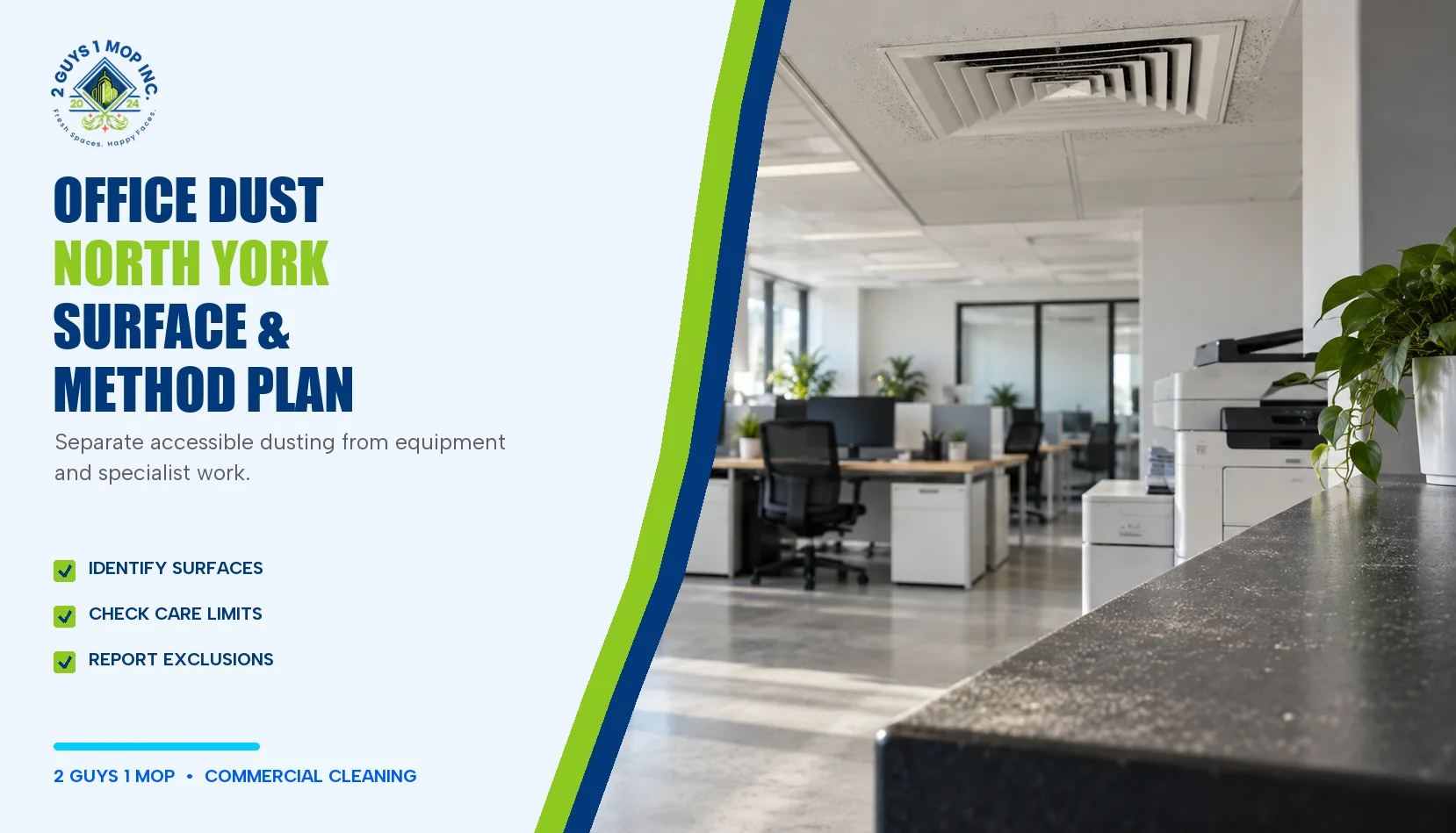
Define North York office dusting by included surface, permitted reach and material instructions. Keep powered equipment, high access and environmental assessment outside ordinary assumptions.
List the surfaces in the dusting route
A request to reduce dust should specify the accessible desk areas, shelves, sills, trim and equipment exteriors actually included. Record who clears objects. Do not assume the cleaner can reach behind stock or move business materials.
- Name accessible ledges and fixture exteriors rather than every hidden surface.
- Identify personal devices, papers and confidential items that remain untouched.
- Record the maximum permitted reach and separately assess high or restricted work.
Match the process to the material
Product and equipment instructions should govern how included surfaces are treated. A powered screen, fabric chair and painted ledge need not permit the same method. Unknown material or residue should be paused for direction.
- Collect care restrictions for electronics, coatings and other sensitive surfaces.
- Identify any approved ordinary dust-removal method without assuming a provider’s equipment.
- Keep liquid application and movement within the authorized task and manufacturer instructions.
Coordinate the route with ordinary floor care
Dusting and floor work should have a clear sequence in the agreed plan. The point is task coordination, not a claim that a particular route improves indoor air. Material restrictions, access and workplace procedures still apply.
- Clarify which reachable details are recurring and which belong on a separate rotation.
- Assign furniture clearance and any restoration of the room arrangement.
- Report unknown deposits, moisture, damaged surfaces or restricted areas.
Use the inspection to expose access gaps
For example, dust behind a printer may be outside authorized movement. Agree who handles the device or formally exclude that area. Repeatedly marking it missed does not create permission to move powered equipment.
- Check the defined accessible surfaces at a comparable inspection time.
- Record remaining ordinary deposits and excluded or blocked surfaces separately.
- Refer recurring source or ventilation concerns to the appropriate building contact.
Review office dusting North York responsibilities
Audit office access and included surfaces. Build a recurrence observation map.
Reference: Health Canada office-building indoor-air guidance. Use the source for building stewardship context. Surface-cleaning completion does not demonstrate improved air-quality measurements or a health outcome.
For an ordinary commercial request, review the available cleaning services and bring the relevant access and surface information. Confirm the actual tasks, exclusions and provider capability before agreeing to work.