 Fresh Spaces, Happy Faces
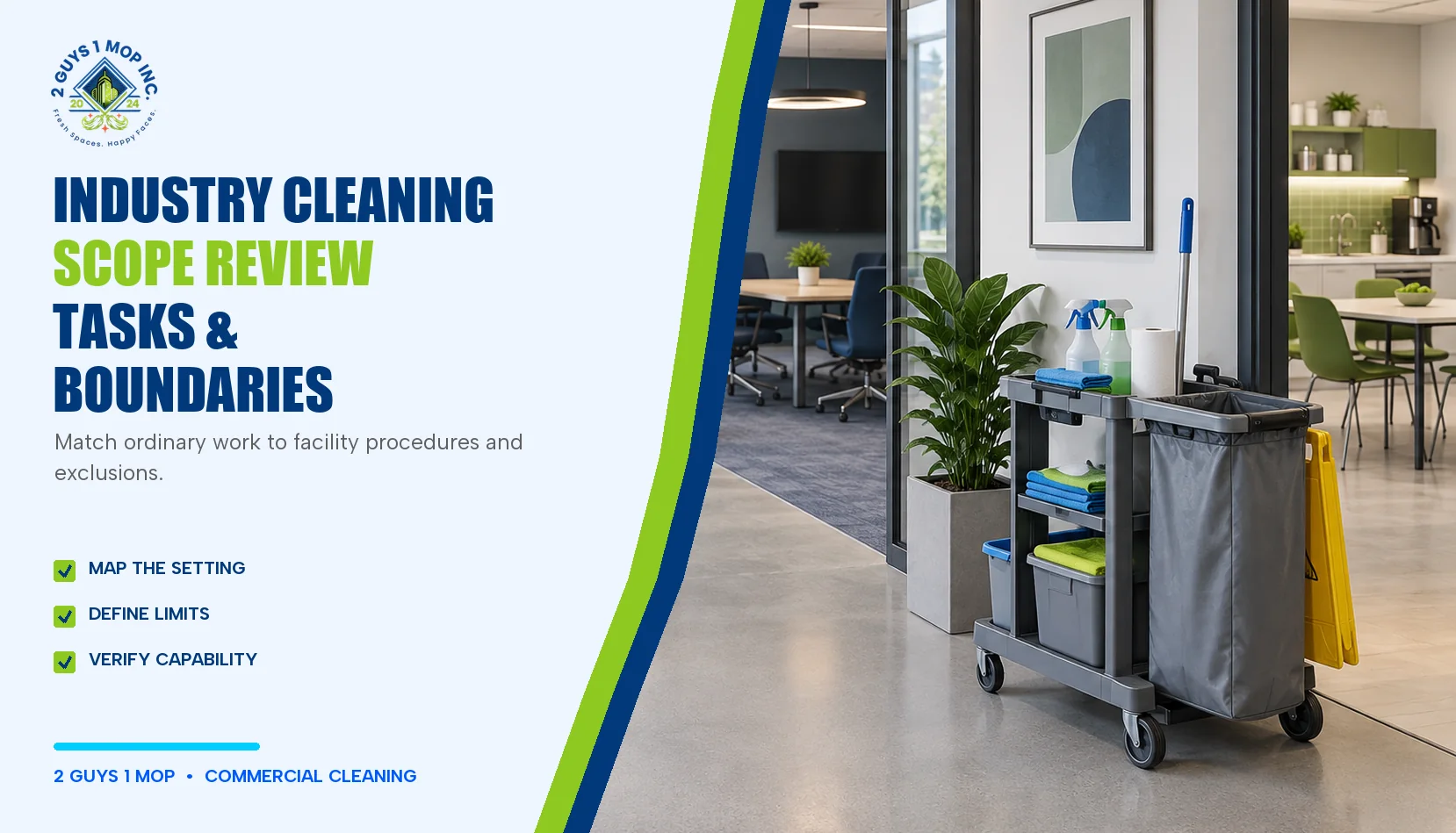
Compare industry cleaning needs through the facility’s actual procedures, surfaces and operating conditions. A business label does not prove a service frequency or specialist capability.
Use the setting to ask better questions
Office, retail, warehouse, gym, daycare and clinic environments can have different materials and responsibilities. Start with the facility’s requirements rather than a generic ranking of which industries need the most cleaning. Some tasks may be governed by specialized procedures.
- Identify the responsible facility contact and the current applicable procedures.
- List ordinary requested zones separately from clinical, food, hazardous or other specialist work.
- Ask the provider to confirm capability for the actual requested scope.
Compare use, soil and access
The same industry can contain very different operating conditions. A small occupied room and a continuously used shared area should not inherit an identical schedule by category alone. Inspect demand and define who responds between visits.
- Record operating hours, shared use, traffic and the ordinary materials present.
- Identify rooms that require release, stock movement or protected access.
- Map the surface-care restrictions and any tasks requiring a separate specialist.
Keep cleaning and facility controls distinct
A warehouse must identify its materials and hazards; a clinic controls its infection-prevention process; a daycare supplies its child-care procedure. Ordinary cleaning instructions cannot authorize work beyond those controls. The quote should name exclusions rather than imply universal service.
- Leave machinery, building systems and equipment servicing to their authorized owners.
- Specify who handles unknown spills, regulated waste or biological incidents.
- Separate routine soil removal from restoration, repair and regulated sanitation.
Choose the closest planning resource
For example, a shared gym bench raises material and between-user responsibility questions, while a receiving aisle raises soil and operational-access questions. Use the relevant scope guide and facility procedure instead of copying one industry checklist into another.
- Write the requested task, result, access and inspection method.
- Compare proposals against those requirements and verified capability.
- Document changes and specialist referrals before expanding an ordinary cleaning agreement.
Review cleaning by industry responsibilities
Review industrial scope and hazard boundaries. Prepare the child-care protocol review. Review clinic waiting-room responsibility.
Reference: CCOHS guidance for cleaning staff. This general workplace guide explicitly distinguishes specialized sanitation settings. It does not establish a company’s ability to perform clinical, food-processing or hazardous-material work.
For an ordinary commercial request, review the available cleaning services and bring the relevant access and surface information. Confirm the actual tasks, exclusions and provider capability before agreeing to work.