 Fresh Spaces, Happy Faces
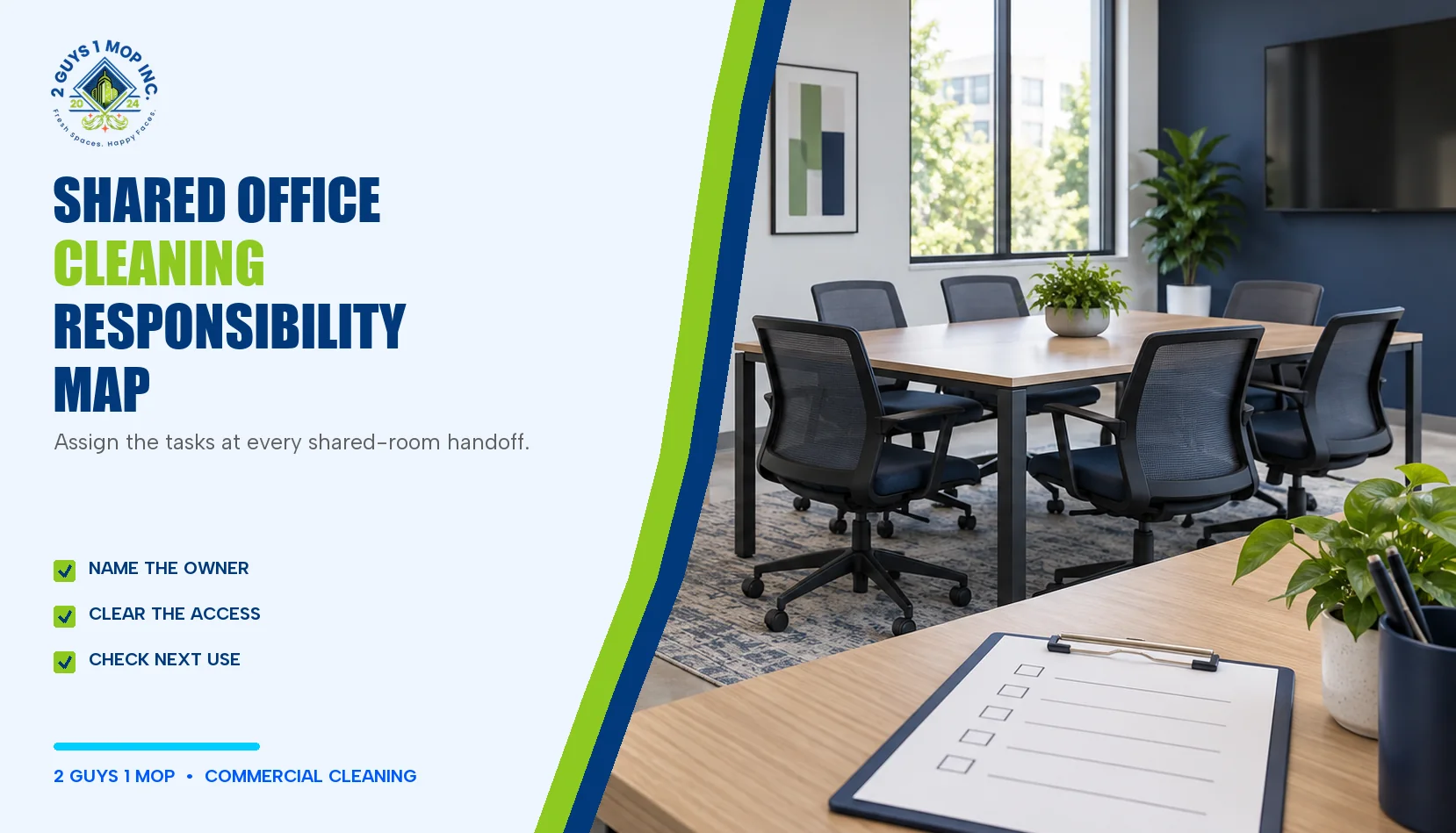
Shared office cleaning problems need a clear owner at each handoff. A meeting room may need an occupant reset before the cleaning team can reach the table; a kitchen spill may need a daytime response; a washroom leak needs maintenance. A single instruction to keep the office clean does not assign those different jobs.
Use this guide to review recurring conditions in a North York shared office. For the wider inspection route, start with the room-by-room office cleaning checklist. The examples below are planning scenarios, not reports of this business’s clients or results.
Describe the problem before changing the schedule
Record the room, condition and time: crumbs on a meeting table after lunch, a full recycling bin before the next visit, or marks on entrance glass after arrivals. Note whether the scheduled task was missed, the surface was inaccessible, or the condition developed after completed work.
Repeated odours, damage or leaks should go to the appropriate property or maintenance contact. Cleaning observations help frame a report; they do not diagnose the cause of every building problem.
Separate three kinds of responsibility
- Occupants: agree who removes personal items, returns room equipment and reports spills.
- Cleaning provider: specify the reachable surfaces, waste tasks and room checks in the written scope.
- Property or maintenance team: assign repairs, building systems, access restrictions and other excluded work.
The CCOHS housekeeping framework includes assigned duties and inspection. Apply that principle to the shared office without assuming that staff or outsourced cleaners are automatically responsible for everything.
Check shared rooms at their next-use handoff
For a meeting room, decide who clears materials after use, when the provider can enter and what condition is expected before the next booking. For shared desks, protect documents and personal devices: confirm which surfaces can be handled and which must first be cleared by the occupant.
Example: if a room stays booked through the service window, record access as an exception and agree on an alternate check. Repeating the same inaccessible task on a checklist does not solve the handoff.
Plan kitchens, waste and washrooms around actual use
Assign spill response during occupied periods separately from scheduled kitchen work. Define who handles dishes, appliances, food storage and ordinary waste; these tasks should not be inferred from the phrase kitchen cleaning. The North York breakroom checklist helps build that room-specific list.
For washrooms, name the inspection contact, supplies responsibility and incident escalation. Choose task timing from use, observed condition and facility policy. A shared office does not create a universal requirement for multiple daily visits or daily disinfection of every surface.
Match methods to surfaces and the agreed scope
List frequently touched items in your own rooms. Confirm compatible methods for electronics and sensitive finishes. When disinfection is required, use the relevant product directions and facility policy; avoid assuming that every wipe is a completed disinfection procedure.
Keep carpet extraction, furniture treatment and other periodic projects separate from recurring visits. Use observed soil and material instructions to decide whether a project is appropriate, then confirm access and any drying requirements.
Review repeat issues with evidence
Keep a short log of the condition, last service, access and agreed response. Ask whether a changed room use, supply gap or unclear ownership explains the recurrence before switching providers or adding visits. If a task was missed, record the correction and check it at the next agreed point.
Compare schedule options through the zone-by-zone frequency guide. Ask about the actual commercial service scope and available access windows; a guide is not a guarantee of service inclusion or availability.
Assign ownership at each shared-space handoff
Create one responsibility list for the shared rooms, name what ready means for each room and identify the next inspection. Bring recurring conditions and access conflicts to the scope discussion. Evaluate the agreed tasks directly rather than inferring higher productivity or employee satisfaction from appearance.